Tag Archives: 1969

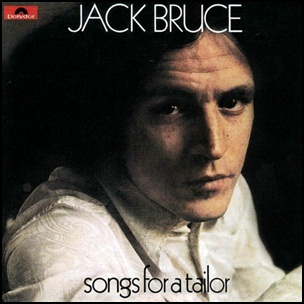
Jazk Bruce: Song For A Tailor

Jack_Bruce_-_Songs_for_a_Tailor

On August 29, 1969, “Polydor” label released “Song for a Tailor”, the debut Jack Bruce studio debut. It was recorded April – May, 1969, and was produced by Felix Pappalardi.

Personnel

  • Jack Bruce– lead and backing vocals, bass, organ, piano, acoustic guitar, cello
  • George Harrison– guitar
  • Chris Spedding– electric guitar
  • Dick Heckstall-Smith– soprano and tenor saxophones
  • Jon Hiseman– drums
  • John Marshall– drums
  • Felix Pappalardi– percussion, acoustic guitar, additional vocals
  • Art Themen – soprano and tenor saxophone
  • Henry Lowther,  Harry Beckett – trumpet
  • John Mumford – trombone

Track listing:

All lyrics by Peter Brown, all music by Jack Bruce.

  1. Never Tell Your Mother She’s Out of Tune
  2. Theme for an Imaginary Western
  3. Tickets to Water Falls
  4. Weird of Hermiston
  5. Rope Ladder to the Moon
  6. The Ministry of Bag
  7. He the Richmond
  8. Boston Ball Game 1967
  9. To Isengard
  10. The Clearout

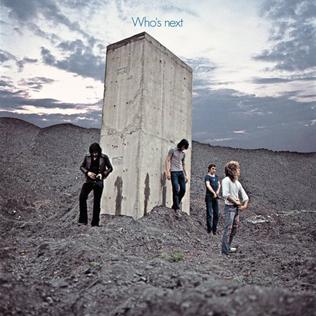
The Who: Who’s Next

Whos next

On August 14, 1971, “Track” label released “Who’s Next”, the fifth Who studio album. It was recorded April -June 1971, at the “Olympic Studios” and “Stargroves” (Rolling Stones Mobile Studio)  in London, and was produced by Glyn Johns, Roger Daltrey, Pete Townshend, John Entwistle and Keith Moon.

Personnel:

  • Roger Daltrey– vocals
  • Pete Townshend– vocals, guitar, VCS3, organ, R.P. synthesiser, piano
  • John Entwistle– vocals, bass, brass, piano
  • Keith Moon– drums, percussion
  • Leslie West– lead guitar
  • Nicky Hopkins– piano
  • Al Kooper– organ
  • Dave Arbus– violin

Track listing:

All tracks by Pete Townshend, except  where noted.

  1. Baba o’Riley
  2. Bargain
  3. Love Ain’t for Keeping
  4. My Wife – John Entwistle
  5. The Song is Over
  6. Getting it True
  7. Going Mobile
  8. Behind Blue Eyes
  9. Won’t Get Fooled Again

Brian Jones

On July 3, 1969, Lewis Brian Hopkin Jones died aged 27. He was musician (guitar, sitar, harmonica, keyboards) and songwriter,  the founder, and original bandleader of the Rolling Stones. As he developed a serious drug problem over the years, his role in the band slowly diminished and Jagger and Richards overshadowed him. In June 1969, he was asked to leave the band and was replaced by Mick Taylor. Jones died by drowning in the swimming pool at his home on Cotchford Farm Hartfield, East Sussex. Bill Wyman (the original Rolling Stones bass player) said of Jones, “He formed the band, he chose the members. He named the band. He chose the music we played. He got us gigs. ..Very influential, very important, and then slowly lost it – highly intelligent – and just kind of wasted it and blew it all away.”

Plastic Ono Band: Give Peace A Chance

GPAC

On June 1, 1969, in room 1742, in “Queen Elizabeth Hotel”, in Montreal, Canada,  John Lennon and Yoko Ono recorded the song “Give Peace A Chance”. The song was written by Lennon and recorded by André Perry, using a simple setup of four microphones and a four-track tape recorder. Lennon played acoustic guitar, accompanied by Tommy Smothers from the “Smothers Brothers”, also on acoustic guitar. The recording session was attended by number of journalists and celebrities, including Petula Clark, Timothy Leary, Rabbi Abraham Feinberg, Joseph Schwartz, Rosemary Woodruff Leary, Dick Gregory, Allen Ginsberg, Murray the K and Derek Taylor. The song was released as a single by “Plastic Ono Band” on July 4, 1969 (UK), on “Apple” label. “Give peace a chance” became an anthem of the American anti-war movement during the 70’s.

Chicago Transit Authority: Same

Chicago

On April 28, 1969, “Columbia” label released the self-titled, same Chicago Transit Authority album. Later the band changed its name to Chicago and the debut album became known as “Chicago I”.  It was recorded in “Columbia Recording Studios” in New York City and was produced by James William Guercio.

Personnel

  • Peter Cetera- vocals, bass guitar, agogo bells
  • Terry Kath- vocals, acoustic and electric guitar
  • Robert Lamm- vocals, acoustic piano, Hammond organ, Hohner Pianet, Wurlitzer electric piano, maracas
  • Lee Loughnane- trumpet, claves
  • James Pankow- trombone, cowbell
  • Walter Parazaider- woodwinds, tambourine
  • Danny Seraphine- drums, percussion
  • Fred Catero – engineer
  • Nick Fasciano – artwork
  • James William Guercio – original liner notes

Track listing:

  1. Introduction – Terry Kath
  2. Does Anybody Really Know What Time It Is? – Robert Lamm
  3. Beginnings – Robert Lamm
  4. Questions 67 and 68 – Robert Lamm
  5. Listen – Robert Lamm
  6. Poem 58 – Robert Lamm
  7. Free Form Guitar – Terry Kath
  8. South California Purples – Robert Lamm
  9. I’m a Man – Steve Winwood, Jimmy Miller
  10. Prologue – James William Guercio
  11. Someday – James Pankow, Robert Lamm
  12. Liberation – James Pankow

Donny Hathaway

On January 13, 1979, Donny Edward Hathaway died aged 34. He was musician (piano, keyboards), singer and songwriter, started successful career after signing contract with “Atlantic Records” in 1969 and after releasing his first single for the “Atco” label, “The Ghetto, Part I”. The “Rolling Stone” magazine “marked him as a major new force in soul music” in 1970 and his collaboration with Roberta Flack won him the “Grammy Award” for “Best Pop Performance by a Duo or Group with Vocals” for the duet, “Where Is the Love” in 1973. On January 13, 1979, Hathaway’s body was found outside the luxury hotel “Essex House” in New York City; his death was ruled a suicide.

Led Zeppelin: Same

LZ

On January 12, 1969, “Atlantic” label released the self-titled, debut Led Zeppelin album. It was recorded October 1968 at “Olympic Studios” in London in only 36 hours, and  was produced by Jimmy Page. The album art was coordinated by George Hardie; the back cover photography of the band was taken by former Yardbirds member Chris Dreja. “Rolling Stone” magazine ranked the album at number 29 on its of the “500 Greatest Albums of All Time”; in 2004 it was inducted into the “Grammy Hall of Fame”.

Personnel:

  • Jimmy Page– acoustic, electric and pedal steel guitars, backing vocals
  • Robert Plant– lead vocals, harmonica
  • John Bonham– drums, timpani, backing vocals
  • John Paul Jones– bass guitar, Hammond organ, backing vocals
  • Viram Jasani– tabla
  • Glyn Johns – engineer
  • Peter Grant– executive production

Track listing:

  1. Good Times Bad Times – Jimmy Page, John Paul Jones, John Bonham, Robert Plant
  2. Babe I’m Gonna Leave You – Anne Bredon, Jimmy Page, Robert Plant
  3. You Shook Me – Willie Dixon,  B. Lenoir
  4. Dazed and Confused – Jimmy Page, inspired by Jake Holmes
  5. Your Time Is Gonna Come – Jimmy Page, John Paul Jones, Robert Plant
  6. Black Mountain Side – Jimmy Page
  7. Communication Breakdown – Jimmy Page, John Paul Jones, John Bonham, Robert Plant
  8. I Can’t Quit You Babe – Willie Dixon
  9. How Many More Times – Jimmy Page, John Paul Jones, Robert Plant, John Bonham

Phil Lynott

On January 4, 1986, Philip Parris “Phil” Lynott died aged 36. He was musician (bass guitar), singer and songwriter, fronted several bands as a lead vocalist, most notably Skid Row alongside Gary Moore, before learning the bass guitar and forming Thin Lizzy in 1969. At the end of the 70′, Lynott embarked upon a solo career, published two books of poetry and after Thin Lizzy disbanded, he assembled and fronted the band Grand Slam, of which he was the leader until it folded in 1985.

The Altamont Speedway Free Festival

On December 6, 1969, “The Altamont Speedway Free Festival” was held at the Altamont Speedway in Northern California. The festival made it in the history mostly for the violence that resulted with the death of Meredith Hunter and three accidental deaths: two caused by a hit-and-run car accident and one by drowning in an irrigation canal, number of injured people, numerous stolen cars and extensive property damage. Performers on the festival were Santana, The Flying Burrito Brothers, Jefferson Airplane, Crosby, Stills, Nash & Young and Rolling Stones. The Grateful Dead canceled their performance due to the rising violence. Approximately 300,000 people attended the concert. Filmmakers Albert and David Maysles shot footage of the festival which can be seen in the 1970 documentary movie “Gimme Shelter”.