In July 1982, “Luna Crack Records/I.O.U. Records“ labels released “I.O.U.”, the second Allan Holdsworth studio album. It was recorded in 1979, at “The Barge” in London, and was produced by Alan Holdsworth.
Personnel:
Allan Holdsworth – guitar, violin
Paul Williams – vocals
Paul Carmichael – bass
Gary Husband – drums, piano
Andy Llewellyn – engineer
Colin Green – mixing
Track listing
All tracks by Allan Holdsworth, except where noted.
The Things You See (When You Haven’t Got Your Gun)
In July 1973, “Vertigo” label released “Bump ‘N’ Grind”, fourth and the last Jackson Heights album. It was recorded in 1973, at “Phonogram Studios” in London, and was produced by Lee Jackson.
Personnel:
John McBurnie – vocals, acoustic guitar, mellotron, percussion
Brian Chatton – vocals, piano, clarinet, organ, mellotron, harpsichord, celesta, tubular bells, electric piano, synthesizer
Lee Jackson – vocals, bass guitar, congas, percussion, electric cello
Roger McKew – guitar
Keith Emerson – Moog synthesizer
Billy Bell – banjo
Chris Laurence – bass
Ian Wallace, Mike Giles – drums
Alan Travers, Andy Babynchuk, Cathy Wei, Clare Farmer, David Woodcock, Eddy Roberts, Liz Edwards, Gavyn Wright, Godfrey Salmon, Jeff Grey, Louise Jopling, Paul Pearce – violin
Johnny Van Derrick – violin solo
Brian Hawkins, Brian Mack, Don McVay, Jan Schlapp – viola
Helen Liebmann, Lynden Cranham, Martin Robinson, Mike Hurwitz – cello
Johnny Van Derrick – fiddle
Ian Green – arrangements, conductor
Chris Harding, Roger Wake – engineer
Fabio Nicoli, Roger Stowell – cover concept
William Stone & Associates – graphics, typography
Roger Stowell – photography
Mlle. Anne Goddet – model on the cover
Ann Chandler – stylist
Johnny Toogood – executive producer
Track listing:
I Could Be Your Orchestra – Murphy, John McBurnie
Spaghetti Sunshine – Brian Chatton
Long Necked Lady – John McBurnie
Public Romance – Brian Chatton
Bump and Grind – John McBurnie
Comberland Country – Brian Chatton, Lee Jackson
It’s a Shame – Brian Chatton, Lee Jackson
Ladies in the Chorus – Brian Chatton, Lee Jackson
Whatever Happened to the Conversation – Brian Chatton, John McBurnie, Lee Jackson
In July 1975, “EMI” label released “Toward the Sun”, the debut Druid album. It was recorded in 1975, at “Morgan Studios” in London, and was produced by Bob Harris.
Personnel:
Dane Stevens – vocals, guitar, arrangements
Andrew McCrorie-Shand – keyboards, choral arrangements, arrangements
Neil Brewer – bass, arrangements
Cedric Sharpley – drums
George Nicholson – engineer
Adrian Sadgrove – design
Richard Langham – lacquer cut
Track listing:
Voices – lyrics by Dane Stevens, music by Andrew McCroire Shand, Dane Stevens
Remembering – lyrics by Dane Stevens, music by Dane Stevens, Neil Brewer
Theme – Andrew McCroire Shand, Cedric Sharpley, Dane Stevens, Neil Brewer
Toward the Sun – Dane Stevens
Red Carpet for an Autumn – lyrics by Neil Brewer, music by Andrew McCroire Shand, Neil Brewer
Dawn of Evening – lurics by Neil Brewer, music by Andrew McCRoire Shand, Neil Brewer
In July 1973, “United Artists” label released “Iceberg”, the debut Deke Leonard album. It was recorded in 1973, at “Rockfield Studios” in Wye Valley in Monmouthshire, Wales, “Olympic Studios” and “Mayfair Studios” in London, and was produced by Dave Edmunds, Deke Leonard, The Man Band and Tim Boyle.
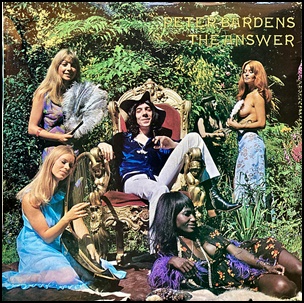
In July 1971, “Transatlantic” label released the self-titled, second Peter Bardens album. It was recorded in 1971, at “Sound Technicues” in London, and was produced by Peter Bardens.
Personnel:
Peter Bardens – vocals, piano, organ
Vic Linton – acoustic and electric guitar
Andy Gee – guitar
Victor Brox – vocals, electric violin, Jew’s harp
John Owen – bass guitar
Reginald Isadore – drums, percussion
Anita Pollinger, Judy Powell, Linda Lewis, Lisa Strike, Maxine Iffla – backing vocals
In July 1968, “Island” label released “Karyōbin”, the fourth Spontaneous Music Ensemble (The) studio album. It was recorded in February 1968, at “Olympic Studio” in London, and was produced by Eddie Kramer.
In June 1970, “Epic” label released “Open Road”, the eighth Donovan studio album. It was recorded January – February 1970 at “Morgan” in London, and was produced by Donovan Leitch.
On July 3, 2020, “Strut” label released “Symphonie Pacifique”, the ninth Greg Foat album. It was recorded 2019 – 2020, at “Fish Factory Studio” in London, “Post Electric Studio” in Edinburgh, “Kungsten Studios” in Göteborg, Sweden, and was produced by Greg Foat.
In June 1973, “Deram” label released “Canis Lupus”, the debut Darryl Way’s Wolf album. It was recorded in 1973, at “Advision Studios” in London, and was produced by Ian McDonald.
Personnel:
Darryl Way – violin, viola, keyboards
John Etheridge – guitar
Dek Messecar – vocals, bass
Ian Mosley – drums
Ian McDonald – piano, tambourine
Mike Dunne – recording
Andy Hendriksen – remix
Ray Hendriksen – remix
Bruce Coleman – front cover photography
Jane Burton – back cover photography
Suzette Stephens – inside cover photography
Chris Welch – sleeve notes
Track listing:
The Void – Darryl Way
Isolation Waltz – Darryl Way, Dek Messecar
Go Down – Darryl Way, Dek Messecar
Wolf – Daryl Way, Dek Messecar
Cadenza – Darryl Way, Ian Mosley
Chanson Sand Paroles – Darryl Way, John Etheridge
McDonald’s Lament – Darryl Way, Dek Messecar, Ian Mosley, John Etheridge
In June 1972, “Metronome” label released “Old Boot Wine”, the second Spirogyra album. It was recorded February – March 1972, at “Morgan Studios” in Willesden, London, and was produced by Max Hole.
Barbara Gaskin – vocals, arrangements
Martin Cockerham – vocals, acoustic guitar, arrangements
Mark Francis – vocals, electric guitar, keyboards, arrangements
Steve Borrill – bass guitar, arrangements
Julian Cusack – keyboards, violin, arrangements
Rick Biddulph – mandolin, dormobile
Alan Laing – cello
Dave Mattacks – drums
Robin Black – engineer, mixing
Pete Rhodes – painting, design, photography
Tonstudio Pfanz – lacquer cut
Track listing:
All tracks by Martin Cockerharn, except where noted.