Tag Archives: John Lennon

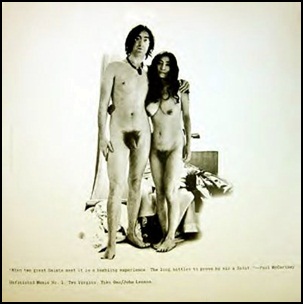
John Lennon And Yoko Ono: Unfinished Music No. 1: Two Virgins

Two Virgins

On November 11, 1968, “Apple” label released “Unfinished Music No. 1: Two Virgins”, the first of three John Lennon and Yoko Ono experimental albums.  “Two Virgins” was recorded during an all-night session in John’s home studio at May 19,  1968, at Surrey, Kenwood, and was produced by John Lennon and Yoko Ono. Six months later “Two Virgins” was followed by “Unfinished Music No.2: Life with the Lions”.

Personnel

  • John Lennon – vocals, piano, organ, percussion, effects, tape loops
  • Yoko Ono – vocals, tape loops
  • Pete Shotton – tape loops

All compositions by John Lennon and Yoko Ono, except where noted.

  1. Two Virgins Side One
    • Two Virgins No. 1
    • Together – George Buddy DeSylva, Lew Brown and Ray Henderson
    • Two Virgins No. 2
    • Two Virgins No. 3
    • Two Virgins No. 4
    • Two Virgins No. 5
  2. Two Virgins Side Two
    • Two Virgins No. 6
    • Hushabye Hushabye – composer unknown
    • Two Virgins No. 7
    • Two Virgins No. 8
    • Two Virgins No. 9
    • Two Virgins No. 10

John Lennon: Menlove Ave

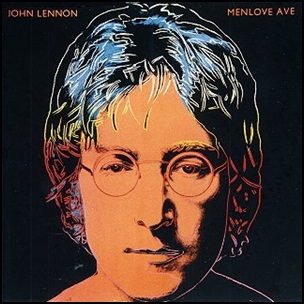
John Lennon-Menlove Avenue

On November 3, 1986, “Parlaphone” label released “Menlove Ave”, the  second John Lennon posthumous album. The album featured outtakes from “Rock’n’Roll” and “Walls and Bridges” sessions, produced by Phil Spector and John Lennon.

Personnel:

  • John Lennon – vocals, guitar, keyboards, piano, arrangements
  • Jesse Ed Davis – guitar
  • Klaus Voorman – bass
  • Jim Keltner – drums
  • Arthur Jenkins – percussion
  • Little Big Horns – horns
  • Dave Thoener – engineer
  • Ed Sprigg – engineer
  • Lee Keifer – engineer
  • Roy Cicala – engineer
  • Shelly Yakus – engineer
  • Jim Lovine – engineer assistant
  • Rob Stevens – mixing
  • George Marino – mastering
  • Roy Kohara – art direction
  • Mark Shoolery – art direction
  • Andy Warhol – illustration
  • Yoko Ono – liner notes

Track listing:

All tracks by John Lennon, except where noted.

  1. Here We Go Again – John Lennon, Phil Spector
  2. Rock and Roll People
  3. Angel Baby – Rosie Hamlin
  4. Since My Baby Left Me – Arthur Crudup
  5. To Know Her Is to Love Her – Phil Spector
  6. Steel and Glass
  7. Scared
  8. Old Dirt Road – John Lennon, Harry Nilsson
  9. Nobody Loves You
  10. Bless You

Billy Preston: Music Is My Life

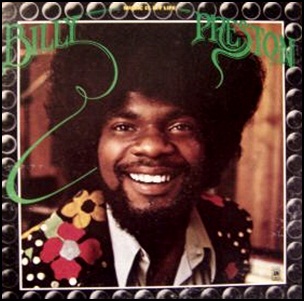
Music_Is_My_Life

On October 8, 1972, “A&M” label released “Music is my Life” the seventh Billy Preston studio album.  It was recorded in 1972, and was produced by Billy Preston.

Personnel:

  • Billy Preston – vocals, keyboards, bass guitar
  • George Johnson – guitars
  • Hubert Heard – keyboards
  • Louis Johnson – bass guitar
  • Manuel Kellough – drums
  • Tom Scott – horn
  • Jim Horn – horn
  • George Bohanon – horn
  • Buck Monari – horn
  • Paul Hubison – horn
  • Clarence McDonald, David T. Walker- arrangements
  • Roland Young – art direction
  • Jim McCarty – photography

Track listing:

All songs by Billy Preston, except where noted.

  1. We’re Gonna Make It
  2. One Time or Another – Billy Preston, Robert Sam
  3. Blackbird – John Lennon, Paul McCartney
  4. I Wonder Why – Billy Preston, George Johnson
  5. Will It Go Round in Circles – Billy Preston, Bruce Fisher
  6. Ain’t That Nothin – Billy Preston, Joe Greene, Robert Sam
  7. God Loves You – Billy Preston, John Schuler
  8. Make the Devil Mad – Turn on to Jesus
  9. Nigger Charlie – Billy Preston, Joe Greene
  10. Heart Full of Sorrow – Billy Preston, George Johnson
  11. Music Is My Life

The Beatles: Love Me Do

LMD

LMDl

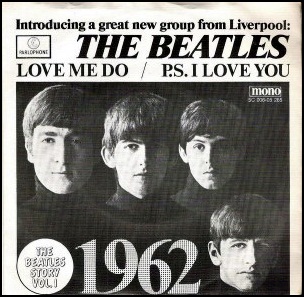
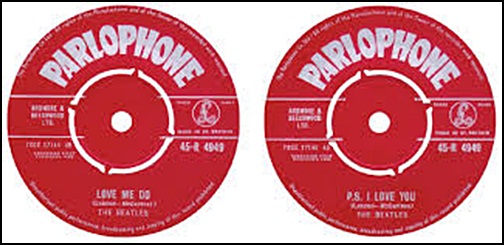
On October 5, 1962, “Parlaphone” label released “Love Me Do”, the Beatles’ first single, with “P.S. I Love You” as B side. “Love Me Do” was written few years before it was released, and before the name The Beatles existed. The song is signed by Lennon and McCartney and the single was produced by George Martin. Three different versions of the song were recorded, each with a different drummer:

  • 6 June 1962 – with Pete Best
  • 4 September 1962 – with Ringo Starr
  • 11 September 1962 – with Andy White

George Martin said: When ‘Love Me Do’ was released, it was the day the world changed.

John Lennon: Imagine

JOhn Lennon Imagine HIGH RESOLUTION COVER ART

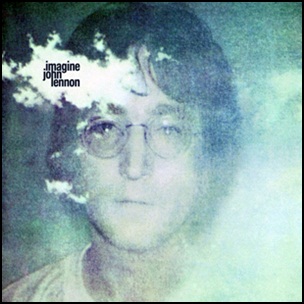
On September 9, 1971, “Apple” label released “Imagine”, the second John Lennon studio album. It was recorded February – July , 1971 at the “Ascot Sound Studios”, Surrey; “Abbey Road Studios”, London and “Record Plant” in New York City, and was produced by John Lennon, Yoko Ono and Phil Spector. The album was ranked at number 80 on the “Rolling Stone” magazine’s list of the “500 Greatest Albums of All Time”.

Personnel:

  • John Lennon – vocals, acoustic and electric guitars, piano; whistling, ;harmonica
  • George Harrison – electric and slide guitar, dobro
  • Ted Turner, Rod Linton – acoustic guitars
  • Joey Molland, Tom Evans– acoustic guitars
  • Rod Linton, Andy Davis – acoustic guitar
  • Michael Pinder– tambourine
  • Nicky Hopkins– piano, electric piano
  • John Tout- piano
  • Steve Brendell – upright bass, maracas
  • Klaus Voormann– bass, upright bass
  • Alan White– drums, Tibetan cymbals, vibraphone
  • Jim Keltner– drums
  • Jim Gordon– drums
  • King Curtis– saxophone
  • John Barham– harmonium, vibraphone
  • The Flux Fiddlers– orchestral strings
  • Phil Spector– backing vocals

All tarcks by John Lennon, except where noted.

  1. Imagine
  2. Crippled Inside
  3. Jealous Guy
  4. It’s So Hard
  5. I Don’t Wanna be a Soldier
  6. Gimme Some Truth
  7. Oh My Love – John Lennon, Yoko Ono
  8. How Do You Sleep?
  9. How?
  10. Oh Yoko!

The Beatles: Help

Help

On August 6, 1965, “Parlaphone” label released “Help!”, the fifth Beatles (The) studio album and the soundtrack from their movie with the same title. It was recorded February – June 1965, at “EMI Studios” in London, and was produced by George Martin. Seven from the total fourteen album songs, including “Help!” and “Ticket to Ride”, appeared in the movie. and took up the first side of the vinyl album. The album also included “Yesterday”, the most-covered song in the history of popular music. “Rolling Stone” magazine ranked the album at number 331 on its list of the “500 Greatest Albums of All Time”.

Personnel:

  • John Lennon– lead, harmony and backing vocals, rhythm guitar, electric piano
  • Paul McCartney– lead, harmony, and backing vocals, lead and bass guitars, acoustic and electric pianos, güiro
  • George Harrison– lead, harmony and backing vocals, lead and rhythm guitars
  • Ringo Starr– lead vocals, drums, miscellaneous percussion
  • George Martin– piano
  • John Scott– tenor and alto flutes
  • Sidney Sax – violin
  • Tony Gilbert – violin
  • Kenneth Essex – viola
  • Francisco Gabarro – cello
  • String quartet on “Yesterday”, arranged by George Martin and Paul McCartney
  • Robert Freeman – photography

Track listing:

All tracks by John Lennon and Paul McCartney, except where noted.

  1. Help!
  2. The Night Before
  3. You’ve Got To Hide Your Love Away
  4. I Need You
  5. Another Girl
  6. You’re Going To Lose That Girl
  7. Ticket To Ride
  8. Act Naturally
  9. It’s Only Love
  10. You Like Me Too Much
  11. Tell Me What You See
  12. I’ve Just Seen A Face
  13. Yesterday
  14. Dizzy Miss Lizzy

The Beatles: Revolver

Revolver

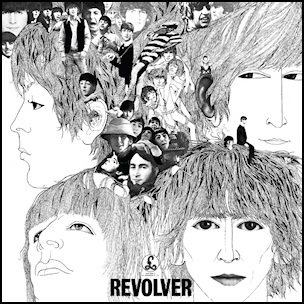
On August 5, 1966, “Parlaphone” released “Revolver” the seventh Beatles (The) album. It was recorded April – June 1966, at “EMI Studios” in London, and was produced by George Martin. The album was recognized by critics as having redefined the parameters of popular music. The album’s Grammy Award-winning cover design was created by Klaus Voormann, old band’s friend from their early years in Hamburg. “Rolling Stone” magazine ranked “Revolver” at number three on its list of the “500 Greatest Albums of All Time”.

Personnel

  • John Lennon– lead, harmony and backing vocals, rhythm and acoustic guitars; piano, Hammond organ, harmonium; tape loops, sound effects; cowbell, tambourine, maracas, handclaps, finger snaps
  • Paul McCartney– lead, harmony and backing vocals, bass, acoustic and lead guitars; piano, clavichord; tape loops, sound effects; handclaps, finger snaps
  • George Harrison– lead, harmony and backing vocals, lead, acoustic, rhythm and bass guitars; sitar, tambura; tape loops, sound effects; maracas, tambourine, handclaps, finger snaps
  • Ringo Starr– lead vocals, drums; tambourine, maracas, handclaps, finger snaps; tape loops
  • Mal Evans– bass drum, backing vocals
  • Anil Bhagwat – tabla
  • Peter Coe, Alan Branscombe– tenor saxophone
  • Eddie Thornton, Ian Hammer, Les Condon – trumpet
  • Alan Civil– French horn
  • Geoff Emerick- tape loops of the marching band
  • George Martin– piano, Hammond organ, tape loops of the marching band
  • Tony Gilbert, Sidney Sax, John Sharpe, Jurgen Hess
  • Stephen Shingles, John Underwood – viola
  • Derek Simpson, Norman Jones – cello
  • Brian Jones – backing vocals
  • Donovan– backing vocals
  • Marianne Faithfull– backing vocals
  • Neil Aspinall– backing vocals
  • Pattie Boyd– backing vocals

Track listing

All tracks by John Lennon and Paul McCartney, except where noted.

  1. Taxman – George Harrison
  2. Eleanor Rigby
  3. I’m Only Sleeping
  4. Love You To – George Harrison
  5. Here, There and Everywhere
  6. Yellow Submarine
  7. She Said She Said
  8. Good Day Sunshine
  9. And Your Bird Can Sing
  10. For No One
  11. Doctor Robert
  12. I Want To Tell You – George Harrison
  13. Got To Get You Into My Life
  14. Tomorrow Never Knows

Filmore East

On June 27, 1971, rock venue “Fillmore East” was closed. Rock promoter Bill Graham opened “Fillmore East” on Second Avenue near East 6th Street in the East Village, in New York City, on March 8, 1968. In its three years of existence, some of the biggest acts in rock music performed in this venue. The “Fillmore East” was a companion to Graham’s “Fillmore Auditorium”, and its successor, the “Fillmore West”, in San Francisco.

Big number of live albums by famous artists was recorded in “Fillmore East”, including:

  • The Allman Brothers Band– At Fillmore East (1971)
  • The Allman Brothers Band– Fillmore East, February 1970 (released 1997) on Grateful Dead Records
  • The Allman Brothers Band- The 1971 Fillmore East Recordings six CD set of both early and late shows from March 12 and 13, 1971, and the complete closing show from June 27, 1971. released by The Island Def Jam Music Group, 2014
  • The Chambers Brothers– Love, Peace and Happiness, a double album with one studio disc and one live disc recorded at Bill Graham’s Fillmore East
  • Joe Cocker– Mad Dogs and Englishmen – The Complete Fillmore East Concerts – March 27–28, 1970 (released 2006)
  • Crosby, Stills, Nash and Young- 4 Way Street (1971)
  • Miles Davis– Live at the Fillmore East, March 7, 1970: It’s About That Time (2001); recorded March 7, 1970, in a rare live recording of Davis’s so-called ‘”lost quintet”
  • Miles Davis– Miles Davis at Fillmore: Live at the Fillmore East (1970); recorded June 17–20, 1970
  • Miles Davis- Miles At The Fillmore – Miles Davis 1970: The Bootleg Series Vol.3, four CD set of the complete shows from June 17, 18, 19 & 20, 1970 plus three bonus tracks from April 11, 1970 at Fillmore West. (released 2014, Columbia – Legacy)
  • Derek and the Dominos– In Concert; recorded October 23–24, 1970 (released 1973)
  • Derek and the Dominos– Live at the Fillmore ; recorded October 23–24, 1970 (released 1994)
  • Flying Burrito Brothers– Authorized Bootleg: Fillmore East, N.Y., N.Y. Late Show, Nov. 7, 1970 (CD, Feb-2011, Hip-O Select)
  • The Fugs– Golden Filth – Alive at the Fillmore East ; recorded June 1, 1968 (released on LP 1970, on CD as part of the Rhino Handmade 3-CD set, Electromagnetic Steamboat 2003)
  • Grateful Dead– Ladies and Gentlemen… The Grateful Dead: Fillmore East – April 1971 (2000) ; a four-disc set taken from their five-night stint at the Fillmore East in April 1971
  • Grateful Dead– Live at the Fillmore East 2-11-69 (1997)
  • Grateful Dead– History of the Grateful Dead, Volume One (Bear’s Choice) (February 13–14, 1970) (1973)
  • Grateful Dead– Dick’s Picks Volume Four – Grateful Dead Fillmore East 2/13–14/70 (1996) ; a three-disc set released on Grateful Dead Records
  • Grateful Dead– Road Trips Volume 3 Number 3 Fillmore East 5-15-70 ; a three-disc set with a bonus fourth disc included with early orders of the set from dead.net; (released 2010)
  • Jimi Hendrix– Band of Gypsys (1970) and Live at the Fillmore East (1999)
  • Humble Pie– Performance Rockin’ the Fillmore (1971). Performance Rockin’ The Fillmore The Complete Recordings, a four disc CD set with the early and late shows from both 5/28/71 and 5/29/71 (released by Omnivore Recordings 2013)
  • Incredible String Band- Live At The Fillmore 1968 ; recorded June 5, 1968; released by Hux Records Ltd, 2013.
  • Iron Butterfly- Fillmore East 1968 ; a two disc set recorded on April 26 & 27, 1968; released by Rhino Entertainment 2011.
  • Jefferson Airplane– Bless Its Pointed Little Head (1969)  ; this album was split between the Fillmore East and Fillmore West.
  • Jefferson Airplane– Live at the Fillmore East (recorded 1968; released 1998)
  • Jefferson Airplane– Sweeping Up the Spotlight: Jefferson Airplane Live at the Fillmore East 1969 (released 2007)
  • King Crimson– Epitaph – two-disc set with three tracks recorded at Fillmore East Nov. 21, 1969
  • King Crimson– Live at Fillmore East – one disc with both Nov. 21 and Nov. 22, 1969 partial sets (released in 2004 on The King Crimson Club label as Club 25)
  • Al Kooper& Mike Bloomfield – Fillmore East: The Lost Concert Tapes ; recorded Dec. 13–14, 1968 (released 2003)
  • Love– Studio / Live – live tracks recorded at Fillmore East (released on LP 1982, on CD 1991)
  • John Lennon and Yoko Ono – Live Jam – Side Two of this live album, which was included as a bonus album in Lennon & Ono’s Some Time in New York City (released: 1972), was recorded at the Fillmore East on June 6, 1971.
  • Taj Mahal– The Real Thing ; recorded Feb. 13, 1971 (remaster with one more track, released 2000)
  • Mountain– Flowers Of Evil – Side 2 recorded at Fillmore East, December 26, 1970
  • John Mayall– The Turning Point (1969) (released on CD 1990, remaster with three more tracks released 2001)
  • The Nice– Live at the Fillmore East December 1969 ; recorded December 19–20, 1969 (released 2009)
  • Laura Nyro– Spread Your Wings and Fly: Live at the Fillmore East (released 2004)
  • Quicksilver Messenger Service– Happy Trails; live tracks recorded at both Fillmore East & Fillmore West (CD released 1994)
  • Ten Years After– Live at the Fillmore East 1970 ; recorded February 27–28, 1970 (released 2001)
  • Johnny Winter– Live Johnny Winter And; recorded at Fillmore East and Pirate’s World, Dania, Florida (released 1971)
  • Johnny Winter– Live at the Fillmore East 10/3/70 (released 2010)
  • Neil Young & Crazy Horse– Live at the Fillmore East recorded March 6–7, 1970 (released on CD and DVD 2006)
  • Frank Zappa and the Mothers of Invention– Freaks And Motherfu*#@%! ; recorded in 1970 (released 1991)
  • Frank Zappa’s Mothers– Fillmore East – June 1971 (released 1971)

Plastic Ono Band: Give Peace A Chance

GPAC

On June 1, 1969, in room 1742, in “Queen Elizabeth Hotel”, in Montreal, Canada,  John Lennon and Yoko Ono recorded the song “Give Peace A Chance”. The song was written by Lennon and recorded by André Perry, using a simple setup of four microphones and a four-track tape recorder. Lennon played acoustic guitar, accompanied by Tommy Smothers from the “Smothers Brothers”, also on acoustic guitar. The recording session was attended by number of journalists and celebrities, including Petula Clark, Timothy Leary, Rabbi Abraham Feinberg, Joseph Schwartz, Rosemary Woodruff Leary, Dick Gregory, Allen Ginsberg, Murray the K and Derek Taylor. The song was released as a single by “Plastic Ono Band” on July 4, 1969 (UK), on “Apple” label. “Give peace a chance” became an anthem of the American anti-war movement during the 70’s.

Rolling Stone Magazine First Number

RS

On November 9, 1967, the first issue of “Rolling Stone” magazine was published in San Francisco. The name of the magazine have been created from three sources: the Muddy Waters song, the first rock ‘n’ roll record by Bob Dylan and The Rolling Stones. The magazine was founded by Jann Wenner, who is still the magazine’s editor-in-chief, and music critic Ralph J. Gleason. The magazine became popular for its musical coverage and  for political reporting by Hunter S. Thompson. The first issue cover featured a photo of John Lennon, dressed in army fatigues from his recent movie “How I Won the War”.