On October 25, 2004, John Robert Parker Ravenscroft aka John Peel died aged 65. He was disc jockey, radio presenter, record producer and journalist, widely acknowledged for promoting artists working in various genres in “Peel’s Radio 1” shows, which usually consisted of four songs recorded by an artist live in the BBC’s studios. In 1969 Peel founded “Dandelion Records”, that label released 27 albums by 18 different artists before folding in 1972.
Tag Archives: 1969
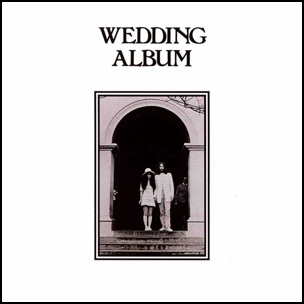
John Lennon And Yoko Ono: Wedding Album
On October 20, 1969, “Apple” label released “Wedding Album”, the final of the three experimental albums by John Lennon and Yoko Ono. It followed “Unfinished Music No. 1: Two Virgins” and “Unfinished Music No. 2: Life with the Lions”. It was recorded 25–31 March 1969, at Room 902, Hilton Hotel in Amsterdam, and 22 and 27 April 1969, at “Abbey Road Studios” in London, and was produced by John Lennon and Yoko Ono.
Personnel:
- John Lennon – vocals, guitars, keyboards, heartbeat sounds
- Yoko Ono– vocals, rare sounds, heartbeat sounds
- Klaus Voormann– electric guitar, bass guitar
- Nicky Hopkins– piano, chimes
- Hugh McCracken– piano, chimes
Track listing:
All tracks by John Lennon and Yoko Ono, except where noted.
- John & Yoko
- Amsterdam
- Who Has Seen the Wind? – Yoko Ono
- Listen, the Snow Is Falling – Yoko Ono
- Don’t Worry Kyoko (Mummy’s Only Looking for Her Hand in the Snow) – Yoko Ono
The Kinks: Arthur
On October 10, 1969, “Pye” label released “Arthur (Or the Decline and Fall of the British Empire)” the seventh Kinks (The) studio album. It was recorded May–July 1969, at “Pye Studios” in London, and was produced by Ray Davis.
Personnel:
- Ray Davies– lead and backing vocals, rhythm guitar, keyboards
- Dave Davies– lead, co-lead vocal and backing vocals, lead guitar
- John Dalton– bass guitar, backing vocals
- Mick Avory– drums, percussion
- Pete Quaife– bass guitar
- Lew Warburton – horn and string arrangements
- Andrew Hendriksen – engineer
- Brian Humphries – engineer
- Bob Lawrie – album art
- Austin Sneller – album tester
Track listing:
All tracks by Ray Davis.
- Victoria
- Yes Sir, No Sir
- Some Mother’s Son
- Drivin’
- Brainwashed
- Australia
- Shangri-La
- Churchill Says
- She’s Bought a Hat Like Princess Marina
- Young and Innocent Days
- Nothing to say
- Arthur
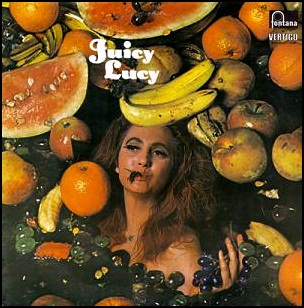
Juicy Lucy: Same
On October 1, 1969, “Vertigo” label released the self-titled, debut Juicy Lucy album. It was recorded in September 1969, at I.B.C. Studios” in London, and was produced by Gerry Bron and Nigel Thomas.
Personnel:
- Ray Owen – lead vocals
- Neil Hubbard – acoustic and electric guitars
- Glenn Ross Campbell – steel guitar, mandolin, marimba, backing vocals
- Chris Mercer – organ, piano, saxophone
- Keith Ellis- bass, backing vocals
- Pete Dobson – drums, percussion
Track listing:
- Mississippi Woman – Ray Owen, Neil Hubbard, Glen Ross Campbell, Chris Mercer, Keith Ellis, Pete Dobson
- Who Do You Love? – Bo Diddley
- She’s Mine – Keith Ellis, Nigel Thomas
- She’s Yours – Keith Ellis, Nigel Thomas
- Just One Time – Neil Hubbard, Glenn Ross Campbell
- Chicago North-Western – Neil Hubbard, Glenn Ross Campbell
- Train – Buddy Miles, Rich
- Nadine – Chuck Berry
- Are You Satisfied? – Pete Dobson, Chris Mercer, Nigel Thomas
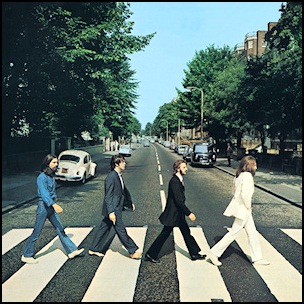
The Beatles: Abbey Road
On September 26, 1969, “Apple Records” label released “Abbey Road” the eleventh Beatles (The) studio album. It was recorded February 22 – August 20, 1969, at “EMI Studios”, “Olympic Studios” and “Trident Studios” in London, and was produced by George Martin. The album recording sessions were the last in which all four Beatles participated. Although “Let It Be” was the final Beatles album before the band’s dissolution in April 1970, most of the album had been recorded before the “Abbey Road” sessions began. The album cover was designed by “Apple Records” creative director Kosh, and It is the only original UK Beatles album sleeve to show neither the artist name nor the album title on its front cover. The cover has become one of the most famous and imitated images in the history of recorded music. “Rolling Stone” magazine ranked “Abbey Road” at number 14 on its list of the “500 Greatest Albums of All Time”. The album was certified Diamond in Argentina by “CAPIF”; 3 x Platinum in Australia by “ARIA”; Diamond in Canada by “Music Canada”; Platinum in Germany by “BVMI”; 5 x Platinum in New Zealand by “RMNZ”; 2 x Platinum in UK by “BPI”, and 12 x Platinum in the US by “RIIA”.
Personnel:
- John Lennon– lead, harmony and backing vocals; lead and rhythm guitars; acoustic and electric pianos, Hammond organ and Moog synthesizer; white noise generator and sound effects; percussion
- Paul McCartney– lead, harmony and backing vocals; lead, rhythm and bass guitars; acoustic and electric pianos, Hammond organ and Moog synthesizer; sound effects; wind chimes, handclaps and percussion
- George Harrison– lead, harmony and backing vocals; lead, rhythm and bass guitars; Hammond organ, harmonium and Moog synthesizer; handclaps, percussion
- Ringo Starr– lead and backing vocals, drums, percussion
- George Martin– piano, harpsichord, organ, harmonium; percussion, mixing
- Billy Preston– Hammond organ
- Mal Evans– “anvil”
- Something” and “Here Comes the Sun” orchestrated and conducted by George Martin and George Harrison
- “Golden Slumbers”, “Carry That Weight” and “The End” orchestrated and conducted by George Martin and Paul McCartney
- Mike Vickers – Moog programming
- Geoff Emerick – recording, mixing
- Phil McDonald – recording, mixing
- Alan Parsons – engineer assistant
- George Martin – mixing
Track listing:
All tracks by John Lennon and Paul McCartney, except where noted.
- Come Together
- Something – George Harrison
- Maxwell’s Silver Hammer
- Oh! Darling
- Octopus’s Garden – Ringo Starr
- I Want You (She’s So Heavy)
- Here Comes the Sun – George Harrison
- Because
- You Never Give Me Your Money
- Sun King
- Mean Mr. Mustard
- Polythene Pam
- She Came in Through the Bathroom Window
- Golden Slumbers
- Carry That Weight
- The End
- Her Majesty

Laura Nyro: New York Tendaberry
On September 24, 1969, “Columbia” label released “New York Tendaberry”, the third Laura Nyro album. It was recorded September 1968 – July 1969 in New York City, and was produced by Laura Nyro and Roy Halee. In 2003, “New York Tendaberry” was included in Mojo’s Collection book of the best albums of all time.
Track listing:
- Laura Nyro – vocals, piano, arrangements
- Gary Chester– drums
- Jimmie Haskell- conductor, orchestral arrangements
- Roy Halee– engineer
- David L. Geffen- friend
- David Gahr – photography
All tracks by Laura Nyro.
- You Don’t Love Me When I Cry
- Captain for Dark Mornings
- Tom Cat Goodbye
- Mercy on Broadway
- Save the Country
- Gibsom Street
- Time and Love
- The Man Who Sends Me Home
- Sweet Lovin’ Baby
- Captain Saint Lucifer
- New York Tendaberry
Neil Young: After The Gold Rush
On September 19, 1970, “Reprise” label released “After the Gold Rush”, the third Neil Young studio album. It was recorded 1969 – June 1970, at “Sunset Sound” in Hollywood; “Sound City”; “Van Nuys” in Los Angeles, and “Redwood Studios” in Topanga, California, and was produced by Neil Young, David Briggs and Kendall Pacios. In 1998, “Q” magazine readers voted “After the Gold Rush” the 89th greatest album of all time. In 2003, Rolling Stone” magazine ranked the album at number 71 on its list of the “500 Greatest Album of All Time”. In 2003, “NME” magazine ranked “After the Gold Rush” at number 80 of the list of the “Greatest Albums of All Time. In 1986, the album was certified 2 x Platinum in the US by the “RIIA”, and 2 x Platinum in UK by the “BPI” in 2004.
Personnel:
- Neil Young — lead vocals, guitar, piano, harmonica, vibes
- Stephen Stills— vocals
- Danny Whitten — vocals, guitar
- Nils Lofgren — vocals, guitar, piano
- Jack Nitzsche— piano
- Billy Talbot— bass
- Greg Reeves — bass
- Ralph Molina — vocals, drums
- Bill Peterson — flugelhorn
Track listing:
All tracks by Neil Young except where noted.
- Tell Me Why
- After the Gold Rush
- Only Love Can Break Your Heart
- Southern Man
- Till the Morning Comes
- Oh, Lonesome Me – Don Gibson
- Don’t Let It Bring You Down
- Birds
- When You Dance I Can Really Love
- I Believe in You
- Cripple Creek Ferry
Fleetwood Mac: Then Play On
On September 19, 1969, “Reprise” label released “Then Play On”, the third Fleetwood Mac studio album. It was recorded 1968 – 1969, at “CBS Studios”; and “De Lane Lea Studios” in London, and was produced by Peter Green, Danny Kirwan, John McVie and Mick Fleetwood. The painting used for the cover of the album is “Domesticated Mural Painting”, by the English artist Maxwell Armfield.
Personnel:
- Peter Green– vocals, guitar, harmonica, six string bass, percussion, violincello
- Danny Kirwan– vocals, guitar
- John McVie– bass guitar
- Mick Fleetwood– drums, percussion
- Jeremy Spencer– piano
- Christine Perfect– piano
- Sandra Elsdon – recording
- Martin Birch – engineer
- Dinky Dawson – sound conultant
Track listing:
- Coming Your Way – Danny Kirwan
- Closing Me Eyes – Peter Green
- Fighting for Madge – Mick Fleetwood
- When You Say – Danny Kirwan’
- Showbiz Blues – Peter Green
- Underway – Peter Green
- One Sunny Day – Danny Kirwan
- Although the Sun Is Shining – Danny Kirwan
- Rattlesnake Shake – Peter Green
- Without You – Danny Kirwan
- Searching for Madge – John McVie
- My Dream – Danny Kirwan
- Like Crying – Danny Kirwan
- Before the Beginning
Judee Still: Same
On September 15, 1971, “Asylum” label released the debut, self-titled Judee Sill album. It was recorded 1969 – 1971, and was produced by Henry Lewy, John Beck, Jim Pons and Graham Nash.
Personnel:
- Judee Sill – vocals, guitar, piano
- David Crosby- guitar
- Graham Nash- organ
- Clydie King, Rita Coolidge, Venetta Fields– backing vocals
- Don Bagley, Bob Harris – orchestration
- Larry Cox – engineer
Track listing:
All tracks by Judee Sill.
- Crayon Angels
- The Phantom Cowboy
- The Archetypal Man
- The Lamb Ran Away with the Crown
- Lady-O
- Jesus Was a Cross Maker
- Ridge Rider
- My Man on Love
- Lopin’ Along Thru the Cosmos
- Enchanted Sky Machines
- Abracadabra