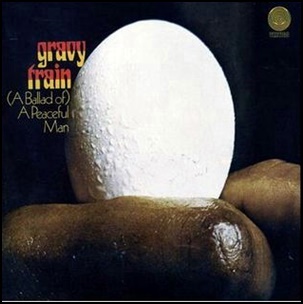
In December 1971, “Vertigo” label released “(A Ballad of) A Peaceful Man”, the second Gravy Train album. It was recorded in 1971, at “Olympic Sound Studios” in Loneon, and was produced by John Peel.
Personnel:
Norman Barratt – vocals, guitar
J.D. Hughes – vocals, keyboards, wind
Lester Williams – vocals, bass
Barry Davenport – drums
Track listing:
All tracks by Norman Barratt, J.D. Hughes, Lester Williams and Barry Davenport.
In December 1971, “Polydor” label released “Astral Taxi”, the second and final Tin Tin album. It was recorded in 1971, and was produced by Billy Lawrie.
Personnel:
Steve Groves – vocals, guitar, percussion
Steve Kipner – vocals, keyboards, percussion
John Vallins – vocals, bass, guitar
Geoff Bridgford – drums
Maurice Gibb – executive producer
Track listing:
All tracks by Steve Groves, Steve Kipner, John Vallins and Geoff Bridgford, except where noted.
Astral Taxi
Ships on the Starboard – Steve Kipner, Steve Groves, Johnny Vallins
Our Destiny
Tomorrow Today – Steve Kipner, Steve Groves, Billy Lawrie
Jenny B.
I Took a Holiday
Tag Around
Set Sail for England
The Cavalry’s Coming – Steve Kipner, Steve Groves, Johnny Vallins
Benny the Wonder Dog – Steve Kipner, Steve Groves, Johnny Vallins
Is That the Way – Steve Kipner, Steve Groves, Billy Lawrie
In December 1971, “Hot Wax” label released “Soulful Tapestry”, the third Honey Cone studio album. It was recorded in 1971, and was produced by Angelo Bond, Ronald Dunbar, Lamont Dozier, Brian Holland, Edward Holland, Jr., General Norman Johnson, Greg Perry, and Edith Wayne.
Personnel:
Edna Wright – lead vocal
Carolyn Willis – vocal
Shelly Clark – vocal
Angelo Bond, General Norman Johnson, Greg Perry – arrangements
Barney Perkins – engineer
Track listing:
One Monkey Don’t Stop No Show Part I – General Johnson, Greg Perry
One Monkey Don’t Stop No Show Part II – General Johnson, Greg Perry
Don’t Count Your Chickens (Before They Hatch) – General Johnson, Greg Perry, Angelo Bond
A Little More – Ronald Dunbar, Edyth Wayne
Stick Up – General Johnson, Greg Perry, Angelo Bond
Want Ads – General Johnson, Greg Perry, Barney Perkins
Who’s It Gonna Be – Holland – Dozier – Holland
How Does It Feel – Brian Holland, Lamont Dozier, Ronald Dunbar, Edyth Wayne
V.I.P. – General Johnson, Greg Perry, Angelo Bond
The Day I Found Myself – Ronald Dunbar, Edyth Wayne, General Johnson
All the King’s Horses (All the King’s Men) – General Johnson, Greg Perry, Angelo Bond
In December 1970, “Capitol” label released “The Price You Got to Pay to Be Free”, album by Cannonball Adderley Quintet album (the 49th Cannonball Adderley album overall). Live material was recorded in September 1970, at the 1970 “Monterey Jazz Festival”, and studio material was recorded in October 1970, at “Capitol Studios” in New York City, and was produced by David Axelrod.
Personnel:
Cannonball Adderley – vocals, soprano and alto saxophone
Nat Adderley – vocals, cornet
Nat Adderley Jr. – vocals, piano, electric piano, guitar
Joe Zawinul – piano, electric piano, ring modulator
Walter Booker – bass
Bob West – bass
Roy McCurdy – drums
Track listing:
All tracks by Julian “Cannonball” Adderley except where noted.
Soul Virgo – George Duke, Mike Deasy, Rick Holmes
Rumplestiltskin – Joe Zawinul
Inquisition – Nat Adderley
Devastatement – Nat Adderley
Pra Dizer Adeus (To Say Goodbye) – Edú Lobo, Torquato Neto, Lani Hall
The Price You Got to Pay to Be Free – Nat Adderley Jr.
Sometime Ago – Sergio Mihanovich
Exquisition – Nat Adderley
Painted Desert – Joe Zawinul
Directions – Joe Zawinul
Down in Black Bottom – Nat Adderley
1-2-3-Go-O-O-O! – Joe Zawinul, Roy McCurdy, Walter Booker, Nat Adderley
Lonesome Stranger – Nat Adderley
Get Up Off Your Knees
Wild-Cat Pee
Alto Sex
Bridges – Milton Nascimento, Fernando Brant, Gene Lees
In December 1969, “Takoma” label released “6 and 12-String Guitar”, the second Leo Kottke album. It was recorded in 1969, at “Empire Photo Sound” in Minneapolis.
Personnel:
Leo Kotke – 6 and 12-string guitars, song notes
Frank Hulbert – lacquer cut
Annie Elliott – illustration, design
Mark Humphrey – liner notes
Personnel:
All tracks by Leo Kottke, except where noted.
The Driving of the Year Nail (from an old Etruscan drawing of a sperm cell)
The Last of the Arkansas Greyhounds (a terror-filled escape on a bus from a man fired from Beaumont ranch)
The Ojo (Ojo Caliente where the Zuni hid from Estaban, the Moor, and the Spaniards)
Crow River Waltz (a prayer for the demise of the canoe and the radar trap without which Federal prisons will have to be rebuilt to accommodate prepubescence)
The Sailor’s Grave on the Prairie (originally written to commemorate Nedicks and a Minneapolis musician’s contempt for the three A.M. cheeseburger with a nickel slice of raw
Vaseline Machine Gun (1 for waking up nude in a sleeping bag on the shore of the Atlantic surrounded by a volleyball game at high noon, 2 for the end of the volleyball game)
Jack Fig (a reluctant lament)
Watermelon (while at Watermelon Park Music Festival I had the opportunity to play a banjo in the middle of the night for a wandering drunk. When I finished, he vomited—an astute comment on my playing. Made me feel very distinguished)
Jesu, Joy of Man’s Desiring (J.S. Bach – the engineer called this the ancient joy of man’s desire). (Bach had twenty children because his organ didn’t have any stops)
The Fisherman (this is about the mad fishermen of the North whose ice fishing spots resemble national shrines)
The Tennessee Toad (who made an epic journey from Ohio to Tennessee)
Busted Bicycle (reluctance)
The Brain of the Purple Mountain (from A. L. Tennyson)
Coolidge Rising (while rising from the sink, cupboard doors opened and engulfed his head; while turning to the right to avoid the whole incident he walked into a refrigerator—which afforded a good chin rest for staring at some bananas in a basket)
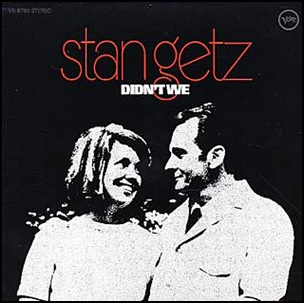
In December 1969, “Verve” label released “Didn’t We”, the 58th Stan Getz album. It was recorded September – October 1969, and was produced by Johnny Pate.
Personnel:
Stan Getz – tenor saxophone
Unidentified orchestra
Johnny Pate – arrangements, conductor
Val Valentin – engineer
Sid Maurer – art direction
Michael Mendel – design
Dom Cerulli – liner notes
Track listing:
Didn’t We – Jimmy Webb
The Shining Sea – Johnny Mandel
The Night Has a Thousand Eyes – Buddy Bernier, Jerry Brainin
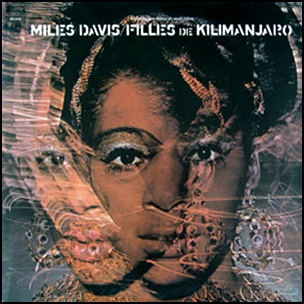
In December 1968, “Columbia” label released “Filles de Kilimanjaro”, the 40th Miles Davis album. It was recorded June – September 1968, at “Columbia 30th Street” in New York City, and was produced by Teo Mecero.
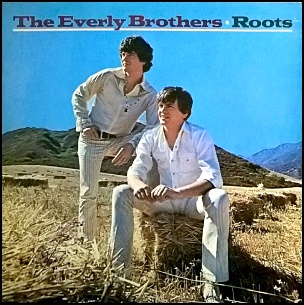
In December 1968, “Warner Bros” label released “Roots”, the 16th Everly Brothers (The) album. It was recorded August – October 1968, and was produced by Lenny Waronker.
Personnel:
Don Everly – vocals, guitar
Phil Everly – vocals, guitar
Perry Botkin, Jr. – arrangements
Nick DeCaro – string arrangements
Ron Elliott – arrangements
John Neil – engineer
Mike Shields – engineer
Lee Herschberg – engineer, mastering
Dave Schultz – mastering
Ed Thrasher – art direction
Frank Bez – photography
Richie Unterberger – liner notes
Andrew Wickham – liner notes, concept
Lenny Waronker – concept
Track listing:
The Introduction: The Everly Family (1952)
Mama Tried – Merle Haggard
Less of Me – Glen Campbell
T for Texas – Jimmie Rodgers
I Wonder If I Care as Much – Don Everly, Phil Everly
Ventura Boulevard – Ron Elliott
Shady Grove – P. O. Wandz, Jacquie Ertel, Venetia Everly
Illinois – Randy Newman
Living Too Close to the Ground – Terry Slater
You Done Me Wrong – George Jones, Ray Price
Turn Around – Ron Elliott
Sing Me Back Home – Merle Haggard
Montage: The Everly Family (1952) / Shady Grove / Kentucky – Terry Slater, Karl Davis
In December 1969, “Warner Bros” label released “Fat Albert Rotunda”, the eighth Herbie Hancock album. It was recorded October, November and December 1969, at Van Gelder Studio” in Englewood Cliffs” in New Jersey, and was produced by Herbie Hancock. The album music was originally recorded for the TV special “Hey, Hey, Hey, It’s Fat Albert”.
Personnel:
Herbie Hancock — piano, electric piano, arrangements, conductor
Eric Gale – guitar
Billy Butler — guitar
Jerry Jemmott – electric bass
Buster Williams — acoustic and electric bass
Albert “Tootie” Heath — drums
Bernard Purdie – drums
Joe Farrell — alto and tenor saxophone
Joe Henderson — tenor saxophone, flute, alto flute
In December 1968, “Liberty” label released “Scratching the Surface”, the debut Groundhogs album. It was recorded in October 1968, at “Marquee Studios” in London, and was produced by Mike Batt.
Personnel:
Tony McPhee – vocals, guitar, coordination
Steve Rye – vocals, harmonica
Peter Cruickshank – bass
Ken Pustelnik – drums
Gerry Collins – engineer
Michael Hasted – art direction, design, cover photography