Tag Archives: 1959

Chuck Berry: Chuck Berry Is on Top

In July 1959, “Chess” label released “Chuck Berry Is on Top”, the third Chuck Berry studio album. It was recorded 1955–1959, in Chicago, Illinois, and was produced by Leonard Chess and Phil Chess.

Personnel:

  • Chuck Berry– vocals, guitars
  • Bo Diddley– electric guitar
  • Johnnie Johnson, Lafayette Leake– piano
  • Willie Dixon– double bass
  • George Smith – bass
  • Fred Below, Ebbie Hardy, Jaspar Thomas – drums
  • Jerome Green – maracas
  • The Moonglows– backing vocals

Track listing:

All tracks by Chuck Berry.

  1. Almost Grown
  2. Carol
  3. Maybellene
  4. Sweet Little Rock & Roller
  5. Anthony Boy
  6. Johnny B. Goode
  7. Little Queenie
  8. Jo Jo Gunne
  9. Roll Over Beethoven
  10. Around and Around
  11. Hey Pedro
  12. Blues for Hawaiians

Cliff Richard: Cliff

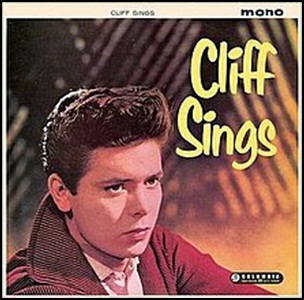
In April 1959, “Columbia” label released “Cliff”, the debut Cliff Richard (and his band the Drifters, later known as the Shadows) album. It was recorded 9 – 10 February 1959, at “Abbey Road Studios” in London, and was produced by Norrie Paramor.

Personnel:

  • Cliff Richard– lead vocals
  • Hank Marvin– lead guitar
  • Bruce Welch- rhythm guitar
  • Jet Harris– bass guitar
  • Tony Meehan– drums
  • Mike Sammes Singers– backing vocals
  • Malcolm Addey – engineer

Track listing:

  1. Apron Strings – George David Weiss, Aaron Schroeder
  2. My Babe – Willie Dixon
  3. Down the Line – Roy Orbison
  4. I Got a Feeling – Baker Knight
  5. Jet Black – Jet Harris
  6. Baby I Don’t Care – Leiber, Stoller
  7. Donna – Ritchie Valens
  8. Move It – Ian Samwell
  9. Ready Teddy – John Marascalco, Robert Blackwell
  10. Too Much – Lee Rosenberg, Bernard Weinman
  11. Don’t Bug Me Baby – Leon Luallen, Johnny Bragg
  12. Driftin’ – Hank Marvin
  13. That’ll Be the Day – Buddy Holly, Jerry Allison
  14. Be-Bop-A-Lula – Gene Vincent
  15. Danny – Ben Weisman, Fred Wise
  16. Whole Lotta Shakin’ Goin On – Dave “Curly” Williams

Bo Didley: Have Guitar Will Travel

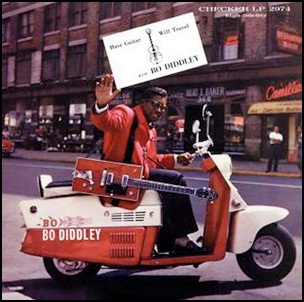
In January 1960, “Checker” label released “Have Guitar Will Travel”, the third Bo Diddley studio album. It was recorded July 1955 – September 1959, in Chicago, Illinois, and was produced by Leonard Chess, Phil Chess and Bo Diddley.

Personnel:

  • Bo Diddley– vocals, guitar
  • Jerome Green – co-lead and backing vocals, maracas
  • Peggy Jones– guitar, backing vocals
  • Jody Williams– guitar
  • Lafayette Leake– piano
  • Lester Davenport– harmonica
  • Willie Dixon– bass
  • Clifton James – drums
  • Frank Kirkland – drums

Track listing:

All tracks by Ellas McDaniel (Bo Diddley), except where noted.

  1. She’s Alright
  2. Cops and Robbers – Kent Harris
  3. Run Diddley Daddy
  4. Mumblin’ Guitar
  5. I Need You Baby
  6. Say Man, Back Again
  7. Nursery Rhyme
  8. I Love You So
  9. Spanish Guitar
  10. Dancing Girl
  11. Come On Baby

Dave Brubeck

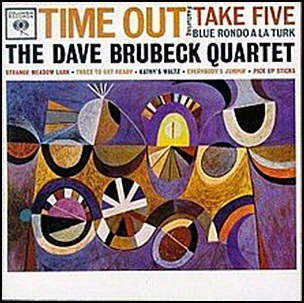
On December 5, 2012, David Warren “Dave” Brubeck died aged 91. He was musician (piano), bandleader and composer, regarded as one of the great post-bop jazz innovators and one of the most influential and popular artists in the jazz history. Brubeck was author of numerous jazz standards, including “In Your Own Sweet Way”, “The Duke”. “Pick Up Sticks”, “Unsquare Dance” and “Blue Rondo à la Turk”. “The Dave Brubeck Quartet” album “Time Out” released in 1959, was based upon the use of time signatures that were unusual for jazz such as 9/8 and 5/4. The album featured Paul Desmond’s track “Take Five”, peaked at #2 on the “Billboard” pop albums chart, has been certified platinum by the “RIAA”, and became one of the best selling jazz albums of all time. As a recognition for his work, Brubeck received many awards, including:

  • Connecticut Arts Award (1987)
  • National Medal of Arts, National Endowment for the Arts (1994)
  • Down Beat Hall of Fame (1994)
  • Grammy Lifetime Achievement Award (1996)
  • Doctor of Sacred Theology, Doctorate honoris causa, University of Fribourg, Switzerland (2004)
  • Laetare Medal(University of Notre Dame) (2006)
  • BBC Jazz Lifetime Achievement Award (2007)
  • Benjamin Franklin Award for Public Diplomacy (2008)
  • Inducted into California Hall of Fame (2008)
  • Eastman School of MusicHonorary Degree (2008)
  • Kennedy Center Honor (2009)
  • George Washington University Honorary Degree (2010)
  • Honorary Fellow of Westminster Choir College, Princeton, New Jersey (2011)

Additionally, the main-belt asteroid “5079 Brubeck” was named after Brubeck.

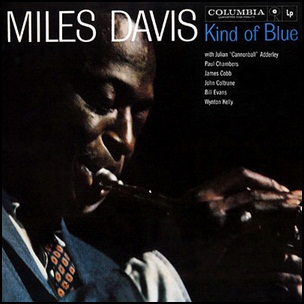
Miles Davis: Kind Of Blue

MilesDavis Kind o fBlue

On August 17, 1959, “Columbia” label released “Kind of Blue” album by Miles Davis. It was recorded March 2 and April 22, 1959, at  “Columbia’s 30th Street Studio” in New York City, and was produced by Teo Macero and Irving Townsend. The album 46 minutes of innovations, improvisation and musical excellence has changed not only the face of jazz but the course of modern music. “Kind of Blue” is not only the best selling jazz album of all times (it was certified quadruple platinum in sales by the “Recording Industry Association of America”) and Davis personal masterpiece but is also regarded as one of the most influential albums in the history of modern music ever. “Rolling Stone” magazine ranked “Kind of Blue” at number 12 on its list of the “500 Greatest Albums of all Time”.

Personnel:

  • Miles Davis – trumpet, band leader
  • Julian “Cannonball” Adderley – alto saxophone
  • John Coltrane – tenor saxophone
  • Bill Evans – piano
  • Wynton Kelly – piano
  • Paul Chambers – double bass
  • Jimmy Cobb – drums
  • Fred Plaut— engineer
  • Bill Evans — original liner notes
  • Don Hunstein — photography

Track listing

  1. So What – Miles Davis
  2. Freddie Freeloader – Miles Davis
  3. Blue in Green – Miles Davis, Bill Evans
  4. All Blues – Miles Davis
  5. Flamenco Sketches – Miles Davis, Bill Evans

Billie Holiday

On July 17, 1959, Eleonora Fagan aka Billie Holiday, died aged 44. Nicknamed “Lady Day” by her friend and musical partner Lester Young, Holiday is one of the true jazz icons and one of the most influential singers of all time.  Famous jazz critics Leonard Feather, said about her: “Billie Holiday’s voice was the living intensity of soul in the true sense of that greatly abused word. As a human being, she was sweet, sour, kind, mean, generous, profane, lovable and impossible, and nobody who knew her expects to see anyone quite like her again.”

Ornette Coleman

On June 11, 2015, Randolph Denard Ornette Coleman, died aged 85. He was musician (saxophone, violin, trumpet), regarded as one of the most important and influential artists in the history of jazz music. Coleman was the major innovator of the free jazz movement in the 60’s, and invented the name “free jazz” with a name of his album. His third studio album from 1959, “The shape of the jazz to come” is regarded as one of the most important albums in the history of modern jazz.

Ray Charles: What’d I Say

What'd I say

On February 18, 1959, Ray Charles recorded the song “What’d I Say”. The recording was made in the late evening improvisation when Charles, his orchestra and backup singers had played their entire set list at a show. “Atlantic” label released the 7” single in July 1959 and it divided the song in two parts (A side and B side) with total length of 6:30 minutes. The song was produced by Jerry Wax. This was Ray Charles first gold record and it is one of the most influential songs in the history of modern music.  In 2002 “What’d I say” was added to the “National Recording Registry” and ranked at number 10 in Rolling Stone ’​s list of “The 500 Greatest Songs of all Time”.