Tag Archives: Jerome Richardson

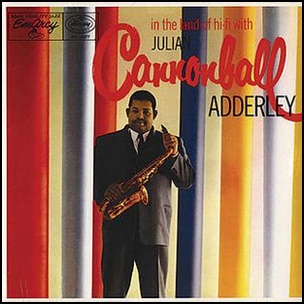
Julian Cannonball Adderley: In the Land of Hi-Fi with Julian Cannonball Adderley

In July 1956, “EmArcy” label released “In the Land of Hi-Fi with Julian Cannonball Adderley”, the fourth Julian Cannonball Adderley album. It was recorded in June 1956, at “Capitol Studios” in New York City.

Personnel:

  • Cannonball Adderley – alto saxophone
  • Jerome Richardson – tenor saxophone, flute
  • Danny Bank – baritone saxophone
  • Nat Adderley – cornet
  • Ernie Royal – trumpet
  • Bobby Byrne, Jimmy Cleveland – trombone
  • Junior Mance – piano
  • Keter Betts – bass
  • Charles “Specs” Wright – drums
  • Ernie Wilkins – conductor, arrangements

Track listing:

  1. Dog My Cats – Ernie Wilkins
  2. I’m Glad There Is You – Jimmy Dorsey, Paul Mertz
  3. Blues for Bohemia – Julian Cannonball Adderley, Nat Adderley
  4. Junior’s Tune – Junior Mance
  5. Between the Devil and the Deep Blue Sea – Harold Arlen, Ted Koehler
  6. Casa de Marcel – Marcel Daniels
  7. Little Girl Blue – Richard Rodgers, Lorenz Hart
  8. T’s Tune – Tommy Turrentine
  9. Broadway at Basin Street – Al Frisch, Sid Wayne
  10. Just Norman – Charles “Specs” Wright
  11. I Don’t Care – Ray Bryant

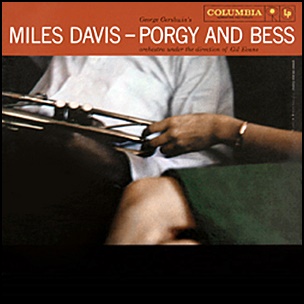
Miles Davis: Porgy And Bess

On March 9, 1959, “Columbia” label released “Porgy and Bess”, album by Miles Davis. It was recorded July – August 1958, at “Columbia 30th Street” in New York City, and was produced by Cal Lampley.

Personnel:

  • Miles Davis – trumpet, flugelhorn
  • Cannonball Adderley – alto saxophone
  • Ernie Royal, Bernie Glow, Johnny Coles, Louis Mucci – trumpet
  • Dick Hixon, Frank Rehak, Jimmy Cleveland, Joe Bennett – trombone
  • Willie Ruff, Julius Watkins, Gunther Schuller – horn
  • Bill Barber – tuba
  • Phil Bodner, Jerome Richardson, Romeo Penque – flute, alto flute, clarinet
  • Danny Bank – alto flute, bass flute, bass clarinet
  • Paul Chambers – bass
  • Philly Joe Jones – drums
  • Jimmy Cobb – drums
  • Gil Evans – arrangements, conductor
  • Frank Laico – recording
  • Roy DeCarava – photography

Track listing:

All tracks by George Gershwin, except where noted.

  1. Buzzard Song
  2. Bess, You Is My Woman Now
  3. Gone – Gil Evans
  4. Gone, Gone, Gone
  5. Summertime
  6. Oh Bess, Oh Where’s My Bess
  7. Prayer (Oh Doctor Jesus)
  8. Fisherman, Strawberry and Devil Crab
  9. My Man’s Gone Now
  10. It Ain’t Necessarily So
  11. Here Come de Honey Man
  12. I Wants to Stay Here (a.k.a. I Loves You, Porgy)
  13. There’s a Boat That’s Leaving Soon for New York

Quincy Jones: Quintessence

In February 1962, “Impulse!” label released “The Quintessence”, album by Quincy Jones and his Orchestra album (the eleventh Quincy Jones album overall). It was recorded November – December 1961, at “Capitol Studios” in New York City, and was produced by Bob Thiele.

Personnel:

  • Phil Woods, Oliver Nelson, Eric Dixon, Frank Wess, Jerome Richardson – saxophone
  • Ernie Royal, Snooky Young, Freddie Hubbard, Al Derisi, Snooky Young, Joe Newman, Thad Jones, Jerome Kail, Clyde Reasinger, Clark Terry – trumpet
  • Billy Byers, Curtis Fuller, Thomas Mitchell, Melba Liston, Billy Byers, Paul Faulise, Rodney Levitt – trombone
  • Julius Watkins, James Buffington, Earl Chapin, Ray Alonge – French horn
  • Harvey Phillips – tuba
  • Gloria Agostini – harp
  • Patricia Bown – piano
  • Bobby Scott – piano
  • George Catlett – bass
  • Milt Hinton – bass
  • James Johnson – drums
  • Bill English – drums
  • Stu Martin – drums
  • Frank Abbey – engineer
  • Bob Arnold – engineer
  • Robert Flynn – design
  • Pete Turner – cover photography
  • Jack Bradley – liner photography
  • Lena Horn – liner notes
  • Lennie Hayton – liner notes

Track listing:

  1. The Quintessence – Quincy Jones
  2. Robot Portrait – Billy Byers
  3. Little Karen – Benny Golson
  4. Straight, No Chaser – Thelonious Monk
  5. For Lena and Lennie – Quincy Jones
  6. Hard Sock Dance – Quincy Jones
  7. Invitation – Bronisław Kaper, Paul Francis Webster
  8. The Twitch – Billy Byers

Quincy Jones: This Is How I Feel About Jazz

In February 1957, “ABC-Paramount” label released “This Is How I Feel About Jazz”, the second Quincy Jones album. It was recorded September 1956 – January 1957, at “Ballone Recording Studios” in New York City, and was produced by Creed Taylor.

Personnel:

  • Quincy Jones – conductor, arrangements
  • Gene Quill – alto saxophone
  • Phil Woods – alto saxophone
  • Zoot Sims, Lucky Thompson – tenor saxophone
  • Lucky Thompson, Bunny Bardach – tenor saxophone
  • Bill Perkins, Buddy Collette, Walter Benton – tenor saxophone
  • Pepper Adams – baritone sax
  • Jack Nimitz – baritone sax
  • Art Farmer, Bernie Glow, Ernie Royal, Joe Wilder – trumpet
  • Jimmy Cleveland, Urbie Green, Frank Rehak – trombone
  • Jerome Richardson – flute, tenor saxophone
  • Herbie Mann – flute
  • Hank Jones – piano
  • Billy Taylor – piano
  • Carl Perkins – piano
  • Charles Mingus – bass
  • Paul Chambers – bass
  • Leroy Vinnegar – bass
  • Shelly Manne – drums
  • Charlie Persip – drums
  • Milt Jackson – vibes

Track listing:

  1. Walkin’ – Richard Carpenter
  2. Stockholm Sweetnin’ – Quincy Jones
  3. Evening in Paris – Quincy Jones
  4. Sermonette – Julian Adderley, Jon Hendricks
  5. A Sleepin’ Bee – Harold Arlen, Truman Capote
  6. Boo’s Blues – Quincy Jones

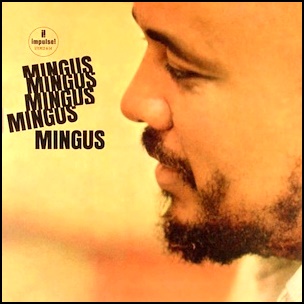
Charles Mingus: Mingus Mingus Mingus Mingus Mingus

On January 9, 1964, “Impulse!” label released “Mingus Mingus Mingus Mingus Mingus”, the 31st Charles Mingus album. It was recorded January – September 1963, in New York City, and was produced by Bob Thiele.

Personnel:

  • Charles Mingus – bass, piano, narration
  • Jerome Richardson – soprano and baritone saxophone, flute
  • Eric Dolphy – alto saxophone, flute, bass clarinet
  • Charlie Mariano – alto saxophone
  • Dick Hafer – tenor saxophone, flute, oboe
  • Booker Ervin – tenor saxophone
  • Eddie Preston – trumpet
  • Richard Williams – trumpet
  • Rolf Ericson – trumpet
  • Richard Williams – trumpet
  • Quentin Jackson – trombone
  • Britt Woodman – trombone
  • Don Butterfield – tuba
  • Jay Berliner – guitar
  • Jaki Byard – piano
  • Walter Perkins – drums
  • Dannie Richmond – drums
  • Bob Hammer – arrangements, orchestration
  • Bob Simpson – engineer
  • Rudy Van Gelder – mastering
  • Robert Flynn – cover design
  • Joe Lebow – liner design
  • Joe Alper – photography
  • Nat Hentoff – liner notes

Track listing:

All tracks by Charles Mingus, except where note.

  1. II B.S.
  2. IX Love
  3. Celia
  4. Mood Indigo – Duke Ellington, Barney Bigard
  5. Better Get Hit in Yo’ Soul
  6. Theme for Lester Young
  7. Hora Decubitus

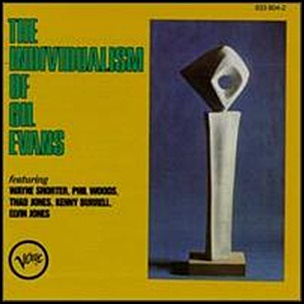
Gil Evans: The Individualism Of Gil Evans

In September 1964, “Verve” label released “The Individualism of Gil Evans”, the sixth Gil Evans album. It was recorded September 1963, April, May, July and October 1964, at “A&R Studios” and “Webster Hall” in New York City, “Van Gelder Studio” in Englewood Cliffs, New Jersey, and was produced by Creed Taylor.

Personnel:

  • Gil Evans – piano, arrangements, conductor
  • Steve Lacy – soprano saxophone
  • Phil Woods – solo alto saxophone
  • Wayne Shorter – solo tenor saxophone
  • Johnny Coles – solo trumpet
  • Thad Jones – trumpet
  • Ernie Royal – trumpet
  • Bernie Glow – trumpet
  • Louis Mucci – trumpet
  • Jimmy Knepper – trombone
  • Frank Rehak – trombone
  • Jimmy Cleveland – solo trombone
  • Tony Studd – trombone
  • Bill Barber – tuba
  • Eric Dolphy – flute, bass clarinet, alto saxophone
  • Jerome Richardson – reeds, woodwinds
  • Bob Tricarico – reeds, woodwinds
  • Garvin Bushell – reeds, woodwinds
  • Andy Fitzgerald – reeds, woodwinds
  • George Marge – reeds, woodwinds
  • Al Block – solo flute
  • Julius Watkins – French horn
  • Gil Cohen – French horn
  • Don Corado – French horn
  • Bob Northern – French horn
  • Jimmy Buffington – French horn
  • Ray Alonge – French horn
  • Pete Levin – French Horn
  • Harry Lookofsky – tenor violin
  • Bob Maxwell – harp
  • Margaret Ross – harp
  • Kenny Burrell – guitar
  • Barry Galbraith – guitar
  • Gary Peacock – bass
  • Ron Carter – bass
  • Paul Chambers – bass
  • Richard Davis – bass
  • Ben Tucker – bass
  • Milt Hinton – bass
  • Elvin Jones – solo drums
  • Osie Johnson – drums
  • Val Valentin – director of engineering
  • Bob Simpson – engineer
  • Phil Ramone – engineer
  • Rudy Van Gelder – engineer
  • Gene Lees – liner notes

Track listing:

  1. Time of the Barracudas – Miles Davis, Gil Evans
  2. The Barbara Song – Bertolt Brecht, Kurt Weill
  3. Las Vegas Tango – Gil Evans
  4. Flute Song/Hotel Me – Miles Davis, Gil Evans
  5. El Toreador – Gil Evans

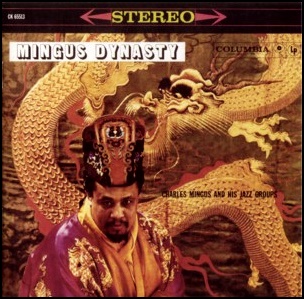
Charles Mingus: Mingus Dynasty

In May 1960, “Columbia” label released “Mingus Dynasty”, the 18th Charles Mingus album. It was recorded in November 1959, at “CBS 30th Street Studio” in New York City, and was produced by Teo Macero. In 1999, the album was inducted in the “Grammy Hall of Fame”.

Personnel:

  • Charles Mingus – bass
  • John Handy – alto sax
  • Booker Ervin – tenor sax
  • Benny Golson – tenor sax
  • Jerome Richardson – baritone sax, flute
  • Richard Williams – trumpet
  • Don Ellis – trumpet
  • Jimmy Knepper – trombone
  • Roland Hanna – piano
  • Nico Bunink – piano
  • Dannie Richmond – drums
  • Teddy Charles – vibes
  • Maurice Brown – cello
  • Seymour Barab – cello
  • Honi Gordon – vocals

Track listing:

All tracks by Charles Mingus, except where noted.                         

  1. Slop
  2. Diane
  3. Song with Orange
  4. Gunslinging Bird (originally titled If Charlie Parker Were a Gunslinger, There’d Be a Whole Lot of Dead Copycats) 
  5. Things Ain’t What They Used to Be – Mercer Ellington
  6. Far Wells, Mill Valley
  7. New Now Know How
  8. Mood Indigo – Barney Bigard, Duke Ellington
  9. Put Me in That Dungeon

Oliver Nelson: The Sound of Feeling

In November 1968, “Verve” label released “The Sound of Feeling” (Leonard Feather Presents the Sound of Feeling and The Sound of Oliver Nelson), the 19th Oliver Nelson album.It was recorded in November 1967, at “Van Gelder Studio” in Englewood Cliffs and in Los Angeles, and was produced by Creed Taylor and Jesse Kaye.

Personnel:

The Sound of Feeling(tracks 1-5)

  • Oliver Nelson – soprano saxophone, arrangements, conductor
  • Alyce Andrece, Rhae Andrece – vocals
  • Gary David – vocals, piano, marxophone, arranger
  • Chuck Domanico, Ray Neapolitan – bass
  • Dick Wilson – drums

The Oliver Nelson Orchestra (tracks 6-9)

  • Oliver Nelson – arranger, conductor
  • Al Dailey, Hank Jones – piano
  • Eric Gale – guitar
  • Ron Carter – bass
  • Grady Tate – drums
  • Phil Kraus, Bobby Rosengarden – mallets, additional percussion
  • Jerome Richardson – soprano saxophone
  • Jerry Dodgion, Phil Woods – clarinets, alto saxophones
  • Jerome Richardson, Zoot Sims – tenor saxophones
  • Danny Bank – baritone saxophone
  • Burt Collins, Joe Newman, Ernie Royal, Clark Terry, Joe Wilder, Snooky Young, Nat Adderley – trumpet, flugelhorn
  • Nat Adderley – cornet
  • Jimmy Cleveland, J. J. Johnson – additional trombones
  • Bob Brookmeyer – valve trombone
  • Tony Studd – bass trombone
  • Jerry Dodgion, Jerome Richardson – flutes
  • Rudy Van Gelder – recording
  • Val Valentin – director of engineering
  • Dave Wiechman – engineer
  • Dick Smith – art direction
  • Fred Seligo – photography
  • Leonard Feather – liner notes

Track listing:

  1. My Favorite Things – Richard Rodgers, Oscar Hammerstein II
  2. Waltz Without Words – Gary David
  3. Who Knows What Love Is? – Gary David
  4. Phrases – Alyce Andrece, Rhae Andrece
  5. Circe Revisited – Gary David, Bob Fylling
  6. Ricardo’s Dilemma – Roy Ayers
  7. Patterns for Orchestra – Oliver Nelson
  8. The Sidewalks of New York – Charles B. Lawlor, James W. Blake
  9. Greensleeves – traditional

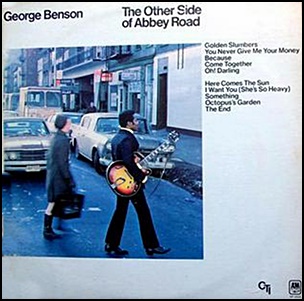
George Benson: The Other Side of Abbey Road

In June 1970, “A&M” label released “The Other Side of Abbey Road”, the eight George Benson album. It was recorded October – November 1969, at “Van Gelder Studio” in Englewood Cliffs, New jersey, and was produced by Creed Taylor.

Personnel:

  • George Benson – vocals, guitar
  • Bob James – acoustic piano, organ, harpsichord
  • Herbie Hancock – acoustic piano, organ, harpsichord
  • Ernie Hayes – acoustic piano, organ, harpsichord
  • Ron Carter – bass
  • Jerry Jemmott – bass
  • Idris Muhammad – drums
  • Ed Shaughnessy – drums
  • Ray Barretto – percussion
  • Andy Gonzalez – percussion
  • Sonny Fortune – alto saxophone
  • Jerome Richardson – tenor saxophone, clarinet, flute
  • Don Ashworth – baritone saxophone
  • Phil Bodner – flute, oboe
  • Hubert Laws – flute
  • Wayne Andre – trombone, euphonium
  • Freddie Hubbard – trumpet
  • Mel Davis – trumpet, flugelhorn
  • Bernie Glow – trumpet, flugelhorn
  • Marvin Stamm – trumpet, flugelhorn
  • Raoul Poliakin – violin
  • Max Pollikoff – violin
  • Emanuel Vardi – viola
  • George Ricci – cello
  • Don Sebesky – arrangements
  • Rudy Van Gelder – engineer
  • Sam Antupit – design
  • Eric Meola – photography

Track listing:

All tracks by John Lennon and Paul McCartney, except where noted.

  1. Golden Slumbers / You Never Give Me Your Money
  2. Because / Come Together
  3. Oh! Darling
  4. Here Comes the Sun – George Harrison / I Want You (She’s So Heavy)
  5. Something – George Harrisons / Octopus’s Garden – Richard Starkey / The End

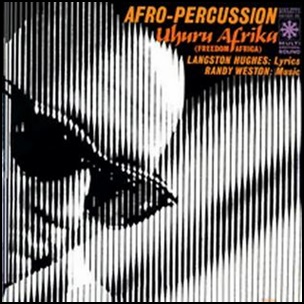
Randy Weston: Uhuru Afrika

In April 1961, “Roulette” label released “Uhuru Afrika”, the thirteenth Randy Weston album. It was recorded in November 1960, at “Bell Sound Studios” in New York City, and was produced by Teddy Reig. The album features lyrics and liner notes by the poet Langston Hughes and was banned in South Africa in 1964.

Personnel:

  • Randy Weston – piano
  • Clark Terry – trumpet, flugelhorn
  • Benny Bailey, Richard Williams, Freddie Hubbard – trumpet
  • Slide Hampton, Jimmy Cleveland, Quentin Jackson – trombone
  • Julius Watkins – French horn
  • Gigi Gryce – alto saxophone, flute
  • Yusef Lateef – tenor saxophone, flute, oboe
  • Sahib Shihab – alto saxophone, baritone saxophone
  • Budd Johnson – tenor saxophone, clarinet
  • Jerome Richardson – baritone saxophone, piccolo
  • Cecil Payne – baritone saxophone
  • Les Spann – guitar, flute
  • Kenny Burrell – guitar
  • George Duvivier, Ron Carter – bass
  • Max Roach, Charlie Persip – drums, percussion
  • Wilbert Hogan – drums
  • Babatunde Olatunji – percussion
  • Armando Peraza – bongos
  • Candido Camero – congas
  • Martha Flowers, Brock Peters – vocals
  • Tuntemeke Sanga – narrator
  • Melba Liston – arranger

Track listing:

All tracks by Randy Weston, except where noted.

  1. Introduction: Uhuru Kwanza – Langston Hughes
  2. First Movement: Uhuru Kwanza
  3. Second Movement: African Lady – Randy Weston, Langston Hughes
  4. Third Movement: Bantu
  5. Fourth Movement: Kucheza Blues