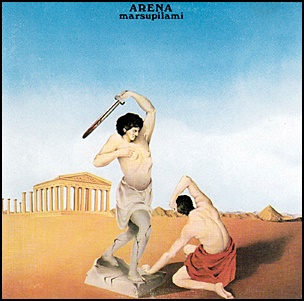
In March 1971, “Transatlantic” label released “Arena”, the second Marsupilami studio album. It was recorded in 1970, and was produced by Peter Bardens.
Personnel:
Fred Hasson – lead vocal, harmonica, percussion
Dave Laverock – vocals, acoustic and electric guitar, bowed guitar, percussion
Leary Hasson – organ, piano, electric piano, tubular bells, mellotronother
Jessica Stanley-Clarke – vocals, flute
Bob West – voice, large mouth piece
Ricky Hicks – bass guitar
Mike Fouracre – drums, percussion, timpani
Peter Bardens – percussion, other
Mandy Riedelbanch – alto and tenor saxophone, flute
Robin Sylvester – engineer
Ray Feibush – design
Fred Wessels, Jim Reveaux – liner notes
John Whitehead – production coordinator
Track listing:
All tracks by Bob West and Leary Hasson, except where noted.
Prelude to the Arena
Peace of Rome
The Arena
Time Shadows – Bob West, Leary Hasson, Fred Hasson
Spring – Dave Laverock, Fred Hasson, Jessica Stanley Clarke, Leary Hasson, Mike Fouracre, Ricky Hicks
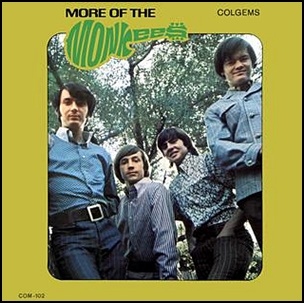
On January 9, 1967, “Colgems” label released “More of the Monkees”, the second Monkees (The) studio album. It was recorded June – November 1966, at “RCA Victor A, B” in Hollywood, “RCA Victor A, B” in New York, “Western Recorders No. 2” in Hollywood, and was produced by Tommy Boyce, Bobby Hart, Carole Bayer Sager, Neil Sedaka, Michael Nesmith, Jeff Barry, Jack Keller, Gerry Goffin and Carole King. The album was certified quintuple platinum in the US by the “RIAA”,
Personnel:
Micky Dolenz – lead vocals and backing vocals
Davy Jones – lead and backing vocals
Peter Tork – lead and backing vocals, guitar
Michael Nesmith – lead and backing vocals, steel guitar
Wayne Erwin – guitar, backing vocals
Gerry McGee – guitar
Louie Shelton – guitar
Al Gafa – guitar
Willard Suyker – guitar
Don Thomas – guitar
James Burton – guitar
Glen Campbell – guitar
Al Casey – guitar
Mike Deasy – guitar
Neil Diamond – guitar
Sal DiTroia – guitar
Al Gorgoni – guitar
Carol Kaye – guitar
Norm Jeffries – tambourine
Michael Cohen – keyboards
Larry Knechtel – keyboards
Neil Sedaka – keyboards
Michael Cohen – keyboards
Larry Knechtel – keyboards
Don Randi – keyboards
Michel Rubini – keyboards
George Butcher – keyboards
Stan Free – keyboards
Bobby Hart – organ, backing vocals
Larry Taylor – bass guitar
Russ Savakus – bass guitar
Bob West – bass guitar
Ray Pohlman – bass guitar
Billy Lewis – drums
Herbie Lovelle – drums
Hal Blaine – drums
Buddy Saltzman – drums
George Devens – percussion
Frank Capp – percussion
Julius Wechter – percussion
Gary Coleman – percussion
Jim Gordon – percussion
Louis Haber – violin
Irving Spice – violin
Louis Stone – violin
David Sackson – viola
Murray Sandry – viola
Seymour Barab – cello
Jeff Barry – backing vocals
Tommy Boyce – backing vocals
Ron Hicklin – backing vocals
Don Peake – conductor
Artie Butler – string arrangements
Don Kirshner – music supervisor
Lester Sill – music coordinator
Emil LaViola – music coordinator
Ernie Oelrich – engineer
Henry Lewy – engineer
Hank Cicalo – engineer
Richie Schmitt – engineer
Richard Podolor – engineer
Dave Hassinger – engineer
Ray Hall – engineer
Track listing:
She – Tommy Boyce, Bobby Hart
When Love Comes Knockin’ (At Your Door) – Carole Bayer Sager, Neil Sedaka
Mary, Mary – Michael Nesmith
Hold on Girl – Billy Carr, Jack Keller, Ben Raleigh
Your Auntie Grizelda – Diane Hildebrand, Jack Keller
(I’m Not Your) Steppin’ Stone – Tommy Boyce, Bobby Hart
Look Out (here Comes Tomorrow) – Neil Diamond
The Kind of Girl I Could Love – Michael Nesmith, Roger Atkins
The Day We Fall in Love – Sandy Linzer, Denny Randell
Sometime in the Morning –Gerry Goffin, Carole King
Laugh – Phil Margo, Mitch Margo, Hank Medress, Jay Siegel
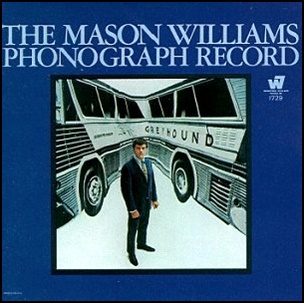
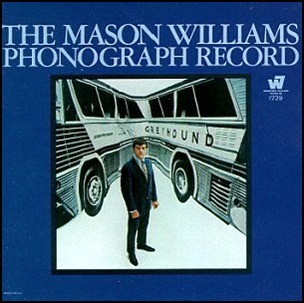
In February 1968, “Warner Bros” label released “The Mason Williams Phonograph Record”, the second Mason Williams album. It was recorded in 1967, and was produced by Mike Post. Mason Williams won two “Grammy Awards”, for “Best Pop Instrumental Performance” and “Best Instrumental Theme”. Mike Post won “Grammy Award” for “Best Instrumental Arrangement of a song”.
Personnel:
Mason Williams – guitar, arrangements
Alvin Casey, David Cohen, James Burton, Michael Deasy – guitar
Lawrence Knechtel, Michael Melvoin – piano
Carl Fortina – accordion
Bob West, Lawrence Knechtel, Lyle Ritz – bass
Lyle Ritz – double bass
James Beck Gordon – drums
Gary L. Coleman, Gene Estes – percussion
Richard J. Hyde, Hoyt Bohannon, Lew McCreary, Richard Leith – trombone
David Duke, William Hinshaw – French horn, tuba
David Burk, Emanuel Moss, George Kast, Harry Bluestone, Israel Baker, Jack Gootkin, Jimmy Getzoff, Jerry Reisler, John Vidor, Ralph Schaeffer, Robert Korda, Robert Sushel, Sidney Sharp, Stan Plummer, Tibor Zelig, William Kurasch – violin
Armand Kaproff, Jerome Kessler, Jesse Ehrlich, Joe DiTullio – cello
In December 1970, “Capitol” label released “The Price You Got to Pay to Be Free”, album by Cannonball Adderley Quintet album (the 49th Cannonball Adderley album overall). Live material was recorded in September 1970, at the 1970 “Monterey Jazz Festival”, and studio material was recorded in October 1970, at “Capitol Studios” in New York City, and was produced by David Axelrod.
Personnel:
Cannonball Adderley – vocals, soprano and alto saxophone
Nat Adderley – vocals, cornet
Nat Adderley Jr. – vocals, piano, electric piano, guitar
Joe Zawinul – piano, electric piano, ring modulator
Walter Booker – bass
Bob West – bass
Roy McCurdy – drums
Track listing:
All tracks by Julian “Cannonball” Adderley except where noted.
Soul Virgo – George Duke, Mike Deasy, Rick Holmes
Rumplestiltskin – Joe Zawinul
Inquisition – Nat Adderley
Devastatement – Nat Adderley
Pra Dizer Adeus (To Say Goodbye) – Edú Lobo, Torquato Neto, Lani Hall
The Price You Got to Pay to Be Free – Nat Adderley Jr.
Sometime Ago – Sergio Mihanovich
Exquisition – Nat Adderley
Painted Desert – Joe Zawinul
Directions – Joe Zawinul
Down in Black Bottom – Nat Adderley
1-2-3-Go-O-O-O! – Joe Zawinul, Roy McCurdy, Walter Booker, Nat Adderley
Lonesome Stranger – Nat Adderley
Get Up Off Your Knees
Wild-Cat Pee
Alto Sex
Bridges – Milton Nascimento, Fernando Brant, Gene Lees
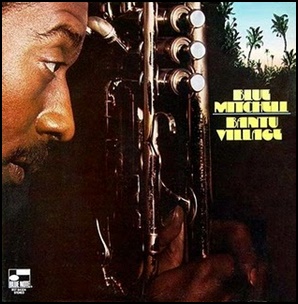
On September 16, 1969, “Blue Note” label released “Bantu Village”, the 16th Blue Mitchell album. It was recorded in May 1969, at “RPM Studios” in Los Angeles.
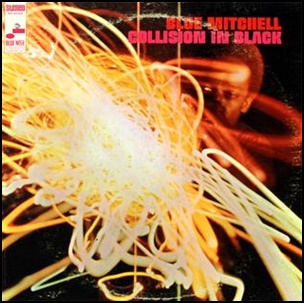
In April 1969, “Blue Note” label released “Collision in Black”, the 15th Blue Mitchell album. It was recorded in September 1968, at “RPM Studios” in Los Angeles, and was produced by Monk Higgins and Dee Ervin.
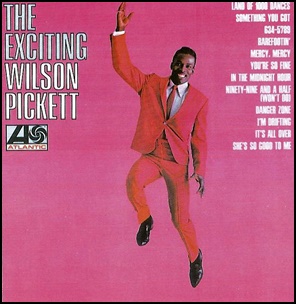
In August 1966, “Atlantic” label released “The Exciting Wilson Pickett”, the third Wilson Pickett album. It was recorded May 1965 – May 1966, in Memphis, Tennessee, and Muscle Shoals, Alabama, and was produced by Jerry Wexler, Steve Cropper, Jim Stewart, Rick Hall, and Tom Dowd.
Personnel:
Wilson Pickett– vocals
Steve Cropper, Jimmy Johnson, Chips Moman– guitar
Joe Hall, Isaac Hayes, Spooner Oldham– keyboards, piano
Tommy Cogbill, Donald Dunn– bass guitar
Roger Hawkins, Al Jackson Jr.– drums
Wayne Jackson, Gene “Bowlegs” Miller– trumpet
Charles “Packy” Axton, Andrew Love, Charles Chalmers– tenor saxophone
Floyd Newman – baritone saxophone
Steve Cropper – supervisor
Tom Dowd– engineer, supervisor
Rick Hall – engineer, supervisor
Jim Stewart– engineer, supervisor
Haig Adishian – design
Bob Rolontz– liner notes
Scott Galloway – liner notes
Nick Samardge – photography
Jerry Wexler– supervisor
Track listing:
Land of 1000 Dances – Chris Kenner
Something You Got – Chris Kenner
634-5789 (Soulsville, U.S.A.) – Steve Cropper, Eddie Floyd
Barefootin’ – Robert Parker
Mercy Mercy – Don Covay, Ronald Dean Miller
You’re So Fine – Lance Finney, Willie Schofield, Bob West
In the Midnight Hour – Steve Cropper, Wilson Pickett
Ninety-nine and a Half (Won’t Do) – Steve Cropper, Eddie Floyd, Wilson Pickett
In June 1970, ‘King” label released “It’s a New Day – Let a Man Come In”, the 29th James Brown studio album. It was recorded 1969 – 1970, at “King Studios” in Cincinnati, Ohio, “Paramount Studios” in Los Angels, “Galo Studios” in NY, “Criteria Studios” in Miami, “Harmony Studios” in Los Angels, and was produced by James Brown.
Personnel:
James Brown – vocal
Wallace Richardson – guitar
Alfonzo Kellum – guitar
Kenny Poole – guitar
Jimmy Nolen – guitar
Don Rand – organ
Nat Jones – piano, drums
James Vaughan – piano
St – Clair Pinckney – bass
Bob West – bass
Sweet’ Charles Sherrell – electric bass
Bernard Purdie – drums
John Starks – drums
Clyde Stubbelfield – drums
Melvin Parker – drums
Ben Barrett – drums
Beau Dollar – drums
Maceo Parker – alto saxophone
Pee Wee Ellis – alto saxophone
Fred Wesley – trombone
Eldee Williams – trumpet
Joe Davis – trumpet
Allen De Rienzo – trumpet
Conte Candoli – trumpet
Paula Hibbs-Rines – trumpet
Richard Griffith – trumpet
Waymon Reed – trumpet
Henry Sigismonti – French horn
William Hinshaw – French horn
Sammy Lowe – arranger, conductor
Nat Jones – conductor
David K. Mathews – orchestration
Ron Lenhoff – engineer
Bud Hobgood – editing
Ron Lenhoff – editing
Dan Quest Studio – design
Track listing:
All tracks by James Brown, except where noted.
It’s a New Day, Pts. 1 & 2
Let a Man Come In and Do the Popcorn Pts. 1 & 2
World Pts. 1 & 2
Georgia On My Mind – Hoagy Carmichael, Stuart Gorrell
It’s a Man’s Man’s Man’s World
Give It Up or Turn It a Loose – Charles Bobbit
If I Ruled the World – Cyril Ornadel, Leslie Bricusse
The Man in the Glass Pt. 1 – Bub Hobgood
I’m Not Demanding Pt. 1 – James Brown, Bub Hobgood
In February 1968, “Warner Bros” label released “The Mason Williams Phonograph Record”, the 20th Mason Williams album. It was recorded in 1967, and was produced by Mike Post. Mason Williams won two “Grammy Awards”, for “Best Pop Instrumental Performance” and “Best Instrumental Theme”. Mike Post won “Best Instrumental Arrangement on the Song”.
Personnel:
Mason Williams – guitar
Alvin Casey, David Cohen, James Burton, Michael Deasy– guitar
Lawrence Knechtel, Michael Melvoin– piano
Carl Fortina – accordion
Bob West, Lawrence Knechtel, Lyle Ritz – bass
Lyle Ritz– double bass
James Beck Gordon– drums
David Duke, William Hinshaw – French horn, tuba
Gary L. Coleman, Gene Estes – percussion
Richard J. Hyde, Hoyt Bohannon, Lew McCreary, Richard Leith – trombone
David Burk, Emanuel Moss, George Kast, Harry Bluestone, Israel Baker, Jack Gootkin, Jimmy Getzoff, Jerry Reisler, John Vidor, Ralph Schaeffer, Robert Korda, Robert Sushel, Sidney Sharp, Stan Plummer, Tibor Zelig, William Kurasch – violin
Gail Levant – harp
Armand Kaproff, Jerome Kessler, Jesse Ehrlich, Joe DiTullio – cello
In December 1967, “Warner Bros” label released “Song Cycle”, the debut Van Dyke Parks album. It, was recorded in 1967 at “Sunset Sound Recorders” in Hollywood, and was produced by Lenny Waronker.
Personnel:
Van Dyke Parks – vocal
Ron Elliott, Dick Rosmini – guitar
Nicolai Bolin, Vasil Crlenica, William Nadel, Alan Reuss, Leon Stewart, Thomas Tedesco– balalaika
Carl Fortina – accordion
Misha Goodatieff – violin
Virginia Majewski – viola
Don Bagley, Gregory Bemko, Chuck Berghofer, Harry Bluestone, Samuel Boghossian, Dennis Budimir, Joseph Ditullio, Jesse Ehrlich, Nathan Gershman, Philip Goldberg, Armand Kaproff, William Kurasch, Leonard Malarsky, Jerome Reisler, Orville Rhodes, Trefoni Rizzi, Lyle Ritz, Joseph Saxon, Ralph Schaffer, Leonard Selic, Frederick Seykora, Darrel Terwilliger, Bob West – strings
Gayle Levant – harp
Norman Benno, Arthur Briegleb, Vincent DeRosa, George Fields, William Green, James Horn, Richard Hyde, Jay Migliori, Thomas Morgan, Ted Nash, Richard Perissi, Thomas Scott, Thomas Shepard– woodwind
Billie J. Barnum, Gerri Engeman, Karen Gunderson, James and Vanessa Hendricks, Durrie and Gaile Parks, Julia E. Rinker, Paul Jay Robbins, Nik Woods – choir
Hal Blaine, Gary Coleman, James Gordon, Earl Palmer– percussion




 musicalphabet