Tag Archives: Chuck Rainey

Aretha Franklin: Amazing Grace

On June 1, 1972, “Atlantic” label released “Amazing Grace”, the fourth Aretha Franklin live album. It was recorded in January 1972, at the “New Temple Missionary Baptist Church”, and was produced by Jerry Wexler, Aretha Franklin and Arif Mardin. In 1973, Aretha Franklin won “Grammy Award” for “Best Soul Gospel Performance”. The album was certified 2 x Platinum in US by “RIAA”.

Personnel:

  • Aretha Franklin – lead vocals, piano, celesta, arrangements
  • Rev. C.L. Franklin – vocals
  • Rev. James Cleveland – lead vocals, piano, choir director
  • Rev. Alexander Hamilton – choir director assistant
  • Kenneth “Ken” Lupper – organ, additional keyboards
  • Cornell Dupree – guitar
  • Chuck Rainey – bass
  • Bernard Purdie – drums
  • Pancho Morales – congas, additional percussion
  • Southern California Community Choir – backing vocals
  • Arif Mardin – music editing, remix
  • Wally Heider – recording
  • Jimmy Douglass – recording assistant
  • Gene Paul – recording assistant
  • George Piros – recording assistant
  • Ray Thompson – recording

Track listing:

  1. Mary, Don’t You Weep – spiritual
  2. Medley: Precious Lord, Take My Hand / You’ve Hot a Friend – Thomas A. Dorsey, Frank Frazier / Carole King
  3. Old Landmark – W. Herbert Brewster, Adeline M. Brunner
  4. Give Yourself to Jesus – Robert Fryson
  5. How I Got Over – Clara Ward
  6. What a Friend We Have in Jesus – Joseph M. Seriven, Charles Crozat Converse
  7. Amazing Grace – John Newton
  8. Precious Memories – J.B.F. Wright
  9. Climbing Higher Mountains – traditional
  10. Remarks by Reverend C.L. Franklin
  11. God Will Take Care of You – traditional
  12. Wholy Holy – Marvin Gaye, Renaldo Benson, Al Cleveland
  13. You’ll Never Walk Alone – Richard Rodgers, Oscar Hammerstein II
  14. Never Grow Old – traditional

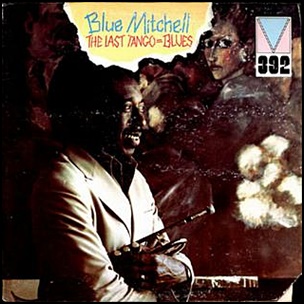
Blue Mitchell: The Last Tango=Blues

On March 7, 1973, “Mainstream” label released “The Last Tango = Blues”, the 20th Blue Mitchell album. It was recorded in 1972, in Los Angeles, and was produced by Bob Shad.

Personnel:

  • Blue Mitchell – trumpet
  • Jackie Kelso, Bill Perkins – flute, tenor saxophone
  • David Angel – clarinet, alto saxophone
  • Steve Kravitz – bass clarinet, baritone saxophone
  • Herman Riley – tenor saxophone
  • David T. Walker – guitar
  • Charles Kynard – organ
  • Darrell Clayborn, Chuck Rainey – electric bass
  • Raymond Pounds – drums
  • King Errisson, Paul Humphrey, Chino Valdes – percussion
  • Dick Fritz – arrangements

Track listing:

  1. Soul Turn Around – Walter Bishop, Jr.
  2. Killing Me Softly With His Song – Charles Fox, Norman Gimbel
  3. The Message – Patrick Patterson, Steve Scipio
  4. Steal the Feel – Richard Fritz
  5. Last Tango in Paris – Gato Barbieri
  6. One for Russ – Alf Clausen
  7. Peace – Horace Silver
  8. P.T. Blues – Blue Mitchell

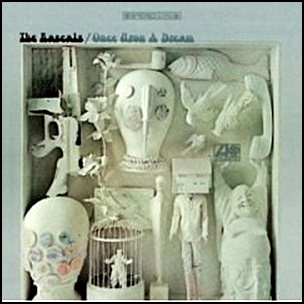
The Rascals: Once Upon A Dream

On February 19, 1968, “Atlantic” label released “Once Upon a Dream”, the fourth Rascals (The) studio album. It was recorded September – November 1967, and was produced by Arif Mardin,

Personnel:

  • Felix Cavaliere – vocals, keyboards, sitar
  • Gene Cornish – vocals, guitar
  • Eddie Brigati – vocals, percussion, tamboura
  • Dino Danelli – drums, table
  • David Brigati – vocals
  • Chuck Rainey, Ron Carter, Richard Davis – bass guitar
  • Steve Marcus – soprano saxophone
  • King Curtis – tenor saxophone
  • Melvin Lastie – trumpet
  • Buddy Lucas – harmonica
  • Hubert Laws – flute
  • Arif Mardin – arranger, conductor
  • Gene Orloff – strings
  • Adrian Barber – sound effects
  • Tom Dowd – engineer
  • Joe Atkinson – mastering
  • Phil Iehle – mastering
  • Bill Inglot – mastering
  • Dave Schultz – mastering
  • Jean Ristori – mastering
  • Andree Buchler – coordination
  • Thierry Amsallem – coordination
  • Dino Danelli – cover sculpture, design
  • Urs Tschuppert – design
  • Mark Roth – photography

Track listing:

All tracks by Felix Cavaliere and Eddie Brigati, except where noted.

  1. Intro: Easy Rollin
  2. Rainy Day
  3. Please Love Me
  4. Sound Effect
  5. It’s Wonderful
  6. I’m Gonna Love You – Gene Cornish
  7. Dave & Eddie
  8. My Hawaii
  9. My World
  10. Silly Girl
  11. Singin’ The Blues Too Long
  12. Bells
  13. Sattva
  14. (Finale) Once Upon a Dream

Quincy Jones; You’ve Got It Bad Girl

In October 1973, “A&M” label released “You’ve Got It Bad Girl”, the 22nd Quincy Jones. It was recorded in 1973, at “A&M Studios”, “Sun West Studios” and “The Record Plant” in Hollywood, “The Burbank Studios” in Burbank, California, “A&R Studios” in New York, and was produced by Quincy Jones.

Personnel:

  • Quincy Jones – vocals, trumpet, arranger, conductor, mixing
  • Quincy Duke – vocals
  • Valerie Simpson – vocals
  • Toots Thielemans – guitar, whistle, harmonica
  • George Duke – piano
  • Dave Grusin – electric piano
  • Bob James & Creations – keyboards
  • Tom Junior Morgan – harmonica
  • Ray Brown – bass, mixing
  • Carol Kaye – electric bass
  • Chuck Rainey – electric bass
  • Grady Tate – drums
  • Bobbye Porter – percussion
  • Phil Woods – alto saxophone
  • Ernie Watts – saxophone
  • Cat Anderson – trumpet
  • Eddie Louis – soloist
  • Phil Ramone – engineer
  • Phil (Boogie) Schier – mixing
  • Kevin Reeves – mastering

Track listing:

  1. Summer in the City – John Sebastian, Mark Sebastian, Steve Boone
  2. Eyes of Love – Quincy Jones, Bob Russell
  3. Tribute to A.F.-Ro’: Daydreaming / First Time Ever I Saw Your Face – Aretha Franklin / Ewan MacColl
  4. Love Theme from The Getaway – Quincy Jones
  5. You’ve Got It Bad Girl – Stevie Wonder, Yvonne Wright
  6. Superstition – Stevie Wonder
  7. Manteca – Gil Fuller, Dizzy Gillespie, Chano Pozo
  8. Sanford and Son Theme (The Streetbeater) – Quincy Jones
  9. Chump Change – Bill Cosby, Quincy Jones

Grant Green: Visions

In September 1971, “Blue Note” label released “Visions”, the 17th Grant Green album. It was recorded in March 1971, at “Van Gelder Studio” in Englewood Cliffs, New Jersey, and was produced by George Butler.

Personnel:

  • Grant Green – guitar
  • Billy Wooten – vibes
  • Emmanuel Riggins – electric piano
  • Chuck Rainey – electric bass
  • Idris Muhammad – drums
  • Harold Caldwell – drums, percussion
  • Ray Armando – conga
  • Rudy Van Gelder – recording

Track listing:

  1. Does Anybody Really Know What Time It Is? – Robert Lamm
  2. Maybe Tomorrow – Marilyn Bergman, Alan Bergman, Quincy Jones
  3. Mozart Symphony #40 in G Minor, K550, 1st Movement – Wolfgang Amadeus Mozart
  4. Love on a Two-Way Street – Bert Keyes, Sylvia Robinson
  5. Cantaloupe Woman – Ben Dixon
  6. We’ve Only Just Begun – Roger Nichols, Paul Williams
  7. Never Can Say Goodbye – Clifton Davis
  8. Blues for Abraham – Eloise Riggins

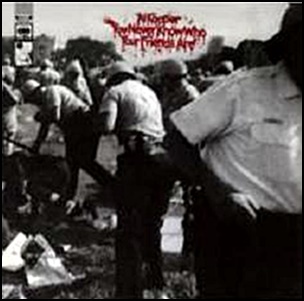
Al Kooper: You Never Know Who Your Friends Are

In September 1969, “Columbia” label released “You Never Know Who Your Friends Are”, the second Al Kooper studio album. It was recorded in 1969, and was produced by Al Kooper.

Personnel:

  • Al Kooper – vocals, piano, organ, guitar, ondioline, arrangements
  • The Al Kooper Big Band under the direction of Charlie Calello
  • Ralph Casale, Stu Scharf, Eric Gale – guitar
  • Ernie Hayes, Paul Griffin, Frank Owens – piano, organ
  • Walter Sears – Moog synthesizer
  • Chuck Rainey, Jerry Jemmott, John Miller – electric bass
  • Bernard Purdie, Al Rogers – drums
  • George Young, Sol Schlinger, Seldon Powell, Joe Farrell – saxophone
  • Bernie Glow, Ernie Royal, Marvin Stamm – trumpet
  • Ray Desio, Jimmy Knepper, Bill Watrous, Tony Studd – trombone
  • Hilda Harris, Connie Zimet, Albertine Robinson, Lois Winter, Michael Gately, Lou Christie, Robert John, Charlie Calello – backing vocals
  • Glen Kolotkin, Roy Segal, Stan Tonkel – engineer
  • Ron Coro – cover art direction, design

Track listing:

All tracks by Al Kooper, except where noted.

  1. Magic in My Socks
  2. Lucille
  3. Too Busy Thinkin’ ’bout My Baby – Norman Whitfield, Janie Bradford
  4. First Time Around
  5. Loretta (Union Turnpike Eulogy)
  6. Blues, Part IV
  7. You Never Know Who Your Friends Are
  8. The Great American Marriage / Nothing
  9. I Don’t Know Why I Love You – Lula Mae Hardaway, Don Hunter, Paul Riser, Stevie Wonder 
  10. Mourning Glory Story – Harry Nilsson
  11. Anna Lee (What Can I Do for You)
  12. I’m Never Gonna Let You Down

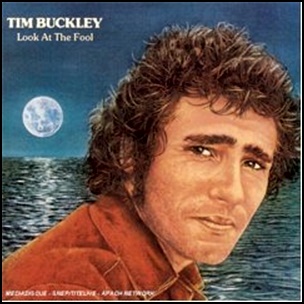
Tim Buckley: Look At The Fool

On September 13, 1973, “DiscReet” label released “Look at the Fool”, the ninth and final Tim Buckley studio album. It was recorded in 1973, at “Wally Heider” and “Record Plant” in Los Angeles, and was produced by Joe Falsia.

Personnel:

  • Tim Buckley – vocals, guitar
  • Joe Falsia – guitar, bass guitar, arrangements
  • Mike Melvoin – organ, piano, Moog synthesizer
  • Mark Tiernan – electric piano
  • Jim Fielder, Jim Hughart, Chuck Rainey – bass guitar
  • Earl Palmer – drums
  • King Errisson – congas
  • Gary Coleman – percussion
  • Terry Harrington – horn, saxophone
  • David Bluefield – clavinet 
  • Richard Nash, William Peterson, John Rotella, Anthony Terran – horn
  • Jesse Ehrlich – cello
  • Venetta Fields, Clydie King, Sherlie Matthews – backing vocals
  • Stan Agol – recording, mixing
  • Wally Heider – mixing
  • Cal Schenkel – art direction
  • Napoleon – cover illustration

Track listing:

All tracks by Tim Buckley, except where noted.

  1. Look at the Fool
  2. Bring It on Up
  3. Helpless
  4. Freeway Blues – Tim Buckley, Larry Beckett
  5. Tijuana Moon – Tim Buckley, Larry Beckett
  6. Ain’t it Peculiar
  7. Who Could Deny You
  8. Mexicali Voodoo
  9. Down in the Street
  10. Wanda Lu

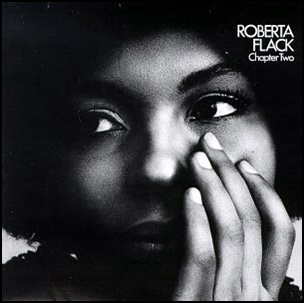
Roberta Flack: Chapter Two

On August 12, 1970, “Atlantic” label released “Chapter Two”, the second Roberta Flack studio album. It was recorded December 1969 – March 1970, at “Atlantic Studios” in New York City, and was produced by Joel Dorn and King Curtis.

Personnel:

  • Roberta Flack – vocals, piano
  • Eric Gale – guitar
  • Donny Hathaway – piano, backing vocals. arrangements
  • Marshall Hawkins, Terry Plumeri, Chuck Rainey – bass guitar
  • Ray Lucas, Bernard Sweetney – drums
  • Warren Smith – percussion
  • Chauncey Welsch, Ernie Royal, Frank Wess, Garnett Brown, George Marge, John Frosk, John Glasel, Trevor Lawrence – horns
  • Hubert Laws, Joe Gentle – alto and bass flute
  • Corky Hale – harp
  • John Swallow – euphonium
  • Alfred Brown, Arnold Black, Emanuel Green, Gene Orloff, Harry Lookofsky, Joe Malin, Kermit Moore, Leo Kahn, Lewis Eley, Max Kahn, Max Pollikoff, Noel Dacosta, Peter Buonconsiglio, Peter Dimitriades, Raoul Poliakin, Sanford Allen, Selwart Clarke, Seymour Myroff, Tosha Samaroff – strings
  • Eumir Deodato – conductor, horn and string arrangements
  • Joel Dorn – arrangements
  • King Curtis – arrangements, backing vocals
  • Gene McDaniels – backing vocals
  • Lew Hahn – recording, remix
  • Ira Friedlander – design
  • Jack Robinson – photography

Track listing:

  1. Reverend Lee – Gene McDaniels
  2. Do What You Gotta Do – Jimmy Webb
  3. Just Like a Woman – Bob Dylan
  4. Let It Be Me – Gilbert Bécaud, Mann Curtis, Pierre Delanoë
  5. Gone Away – Donny Hathaway, Leroy Hutson, Curtis Mayfield
  6. Until It’s Time for You to Go – Buffy Sainte-Marie
  7. The Impossible Dream – Joe Darion, Mitch Leigh
  8. Business Goes on as Usual – Fred Hellerman, Fran Minkoff

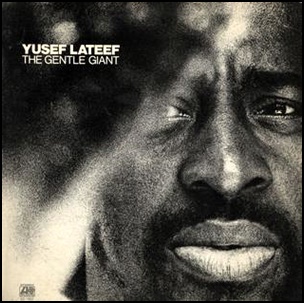
Yusef Lateef: Yusef Lateef’s Detroit

In June 1959, “Atlantic” label released “Yusef Lateef’s Detroit”, the 26th Yusef Lateef album. It was recorded in February 1969, at “Century Sound Studios” in New York City, and was produced by Joel Dorn.

Personnel:

  • Yusef Lateef – vocals, alto and tenor saxophone, flute, oboe
  • Thad Jones, Danny Moore, Jimmy Owens, Snooky Young – trumpet
  • Eric Gale – guitar
  • Hugh Lawson – piano
  • Cecil McBee – bass
  • Chuck Rainey – electric bass
  • Bernard Purdie – drums
  • Roy Brooks – drums
  • Ray Barretto, Norman Pride – congas
  • Albert Heath – percussion
  • Selwart Clarke, James Tryon – violin
  • Alfred Brown – viola
  • Kermit Moore – cello

Track listing:

All compositions by Yusef Lateef, except where noted.

  1. Bishop School
  2. Livingston Playground
  3. Eastern Market
  4. Belle Isle
  5. Russell and Elliot
  6. Raymond Winchester
  7. Woodward Avenue
  8. That Lucky Old Sun – Haven Gillespie, Beasley Smith

Robert Palmer: Some People Can Do What They Like

In October 1976, “Island” label released “Some People Can Do What They Like”, the third Robert Palmer studio album. It was recorded in 1976, at “Clover Studios” in Los Angeles, and was produced by Robert Palmer and Steve Smith.

Personnel:

  • Robert Palmer – vocals
  • Paul Barrere – guitar, backing vocals
  • Freddie Harris, Carol Kaye, Freddy Wall – guitar
  • Bill Payne – keyboards, backing vocals
  • James Allen Smith, William “Smitty” Smith – keyboards
  • Greg Carroll – harmonica
  • Pierre Brock, Chuck Rainey – bass guitar
  • Richie Hayward, Jeff Porcaro, Spider Webb, Robert Greenidge – drums
  • Chilli Charles – timbales
  • Sam Clayton – percussion, congas, backing vocals
  • Jody Linscott – percussion, congas
  • Arthur Smith – ocarina, whistle
  • Phill Brown – engineer, mixing
  • Toby Scott – engineer assistant
  • Richard Digby Smith – additional engineering
  • George Marino – mastering
  • Ria Lewerke – design
  • Moshe Brakha – photography

Track listing:

  1. One Last Look – Bill Payne, Fran Tate
  2. Keep in Touch – Robert Palmer
  3. Man Smart (Woman Smarter) – Norman Span aka King Radio
  4. Spanish Moon – Lowell George
  5. Have Mercy – Don Covay
  6. Gotta Get a Grip on You (Part II) – Robert Palmer, Alan Powell
  7. What Can You Bring Me – James Gadson
  8. Hard Head – Eddie Curtis
  9. Off the Bone – Phill Brown, Robert Palmer, Steve Smith
  10. Some People Can Do What They Like – Robert Palmer