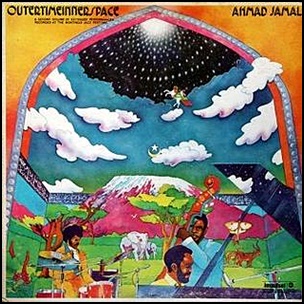
In July 1972, “Impulse!” label released “Outertimeinnerspace”, the 29th Ahmad Jamal album. It was recorded in June 1971, at “Montreux Jazz Festival” at “Casino De Montreux” in Montreux, Switzerland, and was produced by Ed Michel.
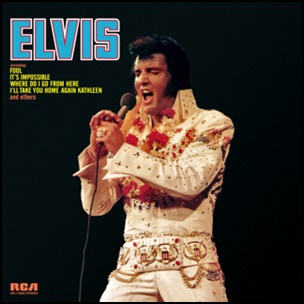
On July 16, 1973, “RCA” label released “Elvis”, the eighteenth Elvis Presley studio album. It was recorded in March 1971 and March 1972, at “RCA” in Hollywood, “RCA Studio B” in Nashville, and was produced by Felton Jarvis.
Personnel:
Elvis Presley – lead vocals, piano
James Burton – lead guitar
Joe Esposito – guitar, percussion
John Wilkinson – rhythm guitar
Chip Young – rhythm guitar
Charlie Hodge – rhythm guitar
Glen D. Hardin – piano, string arrangements
David Briggs – piano
Charlie McCoy – harmonica
Emory Gordy Jr. – bass
Norbert Putnam – bass
Jerry Scheff – bass
Kenneth A. Buttrey – drums
Jerry Carrigan – drums
Ron Tutt – drums
J. D. Sumner – vocals
The Sweet Inspirations – backing vocals
The Nashville Edition – backing vocals
Joe Babcock – backing vocals
Dolores Edgin – backing vocals
Ginger Holladay – backing vocals
The Imperials Quartet – backing vocals
Millie Kirkham – backing vocals
June Page – backing vocals
Temple Riser – backing vocals
Hurshel Wiginton – backing vocals
Mary Holliday – backing vocals
Kathy Westmoreland – backing vocals
Joe Guercio – conductor
Track listing:
Fool – James Last, Carl Sigman
Where Do I Go from Here – Paul Williams
Love Me, Love the Life I Lead – Roger Greenaway, Tony Macaulay
It’s Still Here – Ivory Joe Hunter
It’s Impossible – Armando Manzanero, Sid Wayne
(That’s What You Get) For Lovin’ Me – Gordon Lightfoot
Padre – Jacques Larue, Paul Francis Webster, Alain Romans
I’ll Take You Home Again, Kathleen – Thomas Paine Westendorf
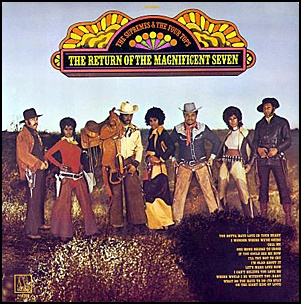
On July 13, 1971, “Motown” label released “The Return of the Magnificent Seven”, the second Supremes (The) and Four Tops collaborative album. It was recorded in 1970, and was produced by Frank Wilson.
Personnel:
Jean Terrell – vocals
Mary Wilson – vocals
Cindy Birdsong – vocals
Levi Stubbs – vocals
Abdul “Duke” Fakir – vocals
Lawrence Payton – vocals
Renaldo “Obie” Benson – vocals
The Funk Brothers – instrumentation
David Van DePitte, Henry Cosby, Paul Riser, Tom Baird – arrangements
Frank Wilson – executive producer
Track listing:
You Gotta Have Love in Your Heart – Nick Zesses, Dino Fekaris
I Wonder Where We’re Going – Tom Baird
Call Me – Tony Hatch
One More Bridge to Cross – Nickolas Ashford, Valerie Simpson
If You Could See Me Now – Janie Bradford, Joe Hinton, Henry Cosby
I’ll Try Not to Cry – Nick Zesses, Dino Fekaris
I’m Glad About It – Nickolas Ashford, Valerie Simpson
Let’s Make Love Now – Nick Zesses, Dino Fekaris
I Can’t Believe You Love Me – Harvey Fuqua, Johnny Bristol
Where Would I Be Without You Baby – Clarence McMurray, Martin Coleman
What Do You Have to Do (To Stay on the Right Side of Love) – Pam Sawyer, Leon Ware
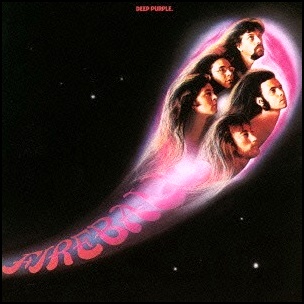
On July 9, 1971, “Harvest” label released “Fireball”, the fifth Deep Purple studio album. It was recorded September 1970 – June 1971, at “De Lane Lea Studios” and “Olympic Studios” in London, “The Hermitage” in Welcombe, North Devon, and was produced by Jon Lord, Ritchie Blackmore, Ian Paice, Roger Glover and Ian Gillan.
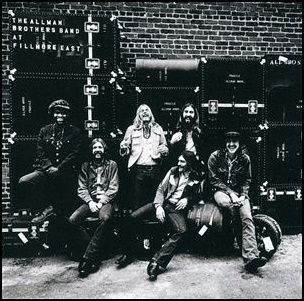
On July 6, 1971, “Capricorn” label released “At Fillmore East”, the third Allman Brothers Band (The) album. It was recorded in March 1971, at “Filmore East” in New York City, and was produced by Tom Dowd.
Personnel:
Duane Allman – lead and slide guitar
Dickey Betts – lead guitar
Gregg Allman – vocals, organ, piano
Berry Oakley – bass guitar
Jai Johanny Johanson – drums, congas, timbales
Butch Trucks – drums, timpani
Thom Doucette – harmonica
Jim Santi – tambourine
Aaron Baron – engineer
Sam Whiteside – engineer
Larry Dahlstrom – engineer assistant
Dennis M. Drake – mastering
Jim Marshall – photography
Tom Dowd – liner notes
Bruce Malamut – assistant producer
Track listing:
Statesboro Blues – Blind Willie McTell
Done Somebody Wrong – Clarence Lewis, Bobby Robinson, Elmore James
Stormy Monday Blues – T-Bone Walker
You Don’t Love Me – Willie Cobbs
Hot ‘Lanta – Duane Allman, Greg Allman, Dickey Betts, Butch Tricks, Berry Oakley, Jai Johanny Johanson
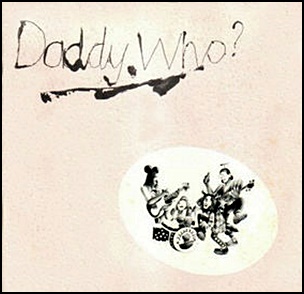
In July 2, 1971, “Sparmac” label released “Daddy Who?… Daddy Cool”, the debut Daddy Cool studio album. It was recorded 1970 – 1971, at “Armstrong Studios” in Melbourne, and was produced by Robie Porter. It was the first Australian recorded album to make No. 1 nationally.
Personnel:
Ross Wilson – vocals, guitar, harmonica
Ross Hannaford – vocals, guitar
Wayne Duncan – vocals, bass guitar
Gary Young – vocals, drums
Robie Porter – piano, steel guitar
Jeremy Noone – saxophone
Dave Brown – tenor saxophone, flute
Roger Savage – engineer
Ross Hannaford – design
Ian McCausland – cover graphics
Track listing:
All tracks by Ross Wilson, except where noted.
Daddy Cool – Frank Slay, Bob Crewe
School Days – Chuck Berry
Come Back Again
At The Rockhouse
Guided Missile – Alfred Gaitwood
Good Rockin’ Daddy – Richard Berry, Joseph Bihari as “Joe Josea”
Eagle Rock
Zoop Bop Gold Cadillac
Blind Date
Bom Bom – Ross Wilson, Ross Hannaford
Cherry Pie – Joseph Bihari as “Joe Josea”, Marvin Phillips
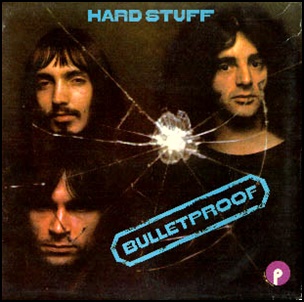
In June 1972, “Purple Records” label released “Bulletproof”, the debut Hard Stuff album. It was recorded August – September 1971, in London, and was produced by John Cann, John Gustafson and Paul Hammond.
Personnel:
John Cann – vocals, guitar, cello
John Gustafson – vocals, bass guitar, keyboards
Paul Hammond – drums, percussion
Harry Shaw – vocals
Louie Austin – engineer
Tony Burrett – cover photo
Track listing:
Jay Time – John Cann
Sinister Minister – John Gustafson
No Witch at All – John Gustafson
Taken Alive – John Gustafson
Time Gambler (Rodney) – John Cann
Millionaire – John Cann
Monster in Paradise – John Gustafson, Ian Gillan, Roger Glover
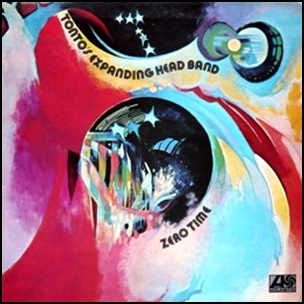
On June 15, 1971, “Embryo Records” label released “Zero Time”, the debut Tonto’s Expanding Head Band studio album. It was recorded in 1971, at “Mediasound” in New York City, and was produced by Malcolm Cecil and Robert Margouleff.
Personnel:
Malcolm Cecil – performer, programming, engineer
Robert Margouleff – performer, programming, engineer
Sol Kessler – mastering consultant
Carol Herzer – cover painting
Isaac Abrams – inside painting
Haig Adishian – design
Joel Brodsky – photography
Herbie Mann – executive producer
Track listing:
All tracks by Malcolm Cecil and Robert Margouleff, except where noted.
In May 1972, “Warner Bros” label released “Bump City”, the second Tower of Power album. It was recorded 1971 – 1972, at “Trans Maximus Inc. Recording Studios” in Memphis, Tennessee, and was produced by Ron Capone, Rick Stevens, Skip Mesquite, Emilio Castillo, Greg Adams, Stephen “Doc” Kupka, Mic Gillette, Francis Rocco Prestia, Willie James Fulton, David Garibaldi and Brent Byars.
Personnel:
Rick Stevens – lead vocals
Willie James Fulton – vocals, guitar
Francis Rocco Prestia – bass
David Garibaldi – drums
Brent Byars – conga drums, vocals
Skip Mesquite – vocals, first tenor saxophone, flute
Emilio Castillo – vocals, second tenor saxophone
Stephen “Doc” Kupka – vocals, baritone saxophone
Greg Adams – vocals, trumpet, flugelhorn, French horn, piano
Mic Gillette – vocals, trumpet, trombone, French horn
Jay Spell – piano
Memphis Strings
Greg Adams – conductor, strings arrangements
Ron Capone, Steve Cropper – mixing
Track listing:
All tracks by Emilio Castillo and Stephen “Doc” Kupka, except where noted.
You Got to Funkifize
What Happened to the World That Day?
Flash in the Pan
Gone (in Memory of Jacqueline Mesquite) – Greg Adams, Skip Mesquite
You Strike My Main Nerve – Stephen “Doc” Kupka, Emilio Castillo, L. Williams, L. Gordon
Down to the Nightclub – Stephen Kupka, Emilio Castillo, David Garibaldi
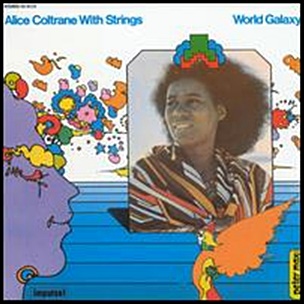
In May 1972, “Impulse!” label released “World Galaxy”, the sixth Alice Coltrane studio album. It was recorded in November 1971, at “The Record Plant” in New York City, and was produced by Ed Michel and Alice Coltrane.
Personnel:
Alice Coltrane – piano, organ, harp, tanpura, percussion, arrangements
Frank Lowe – saxophone, percussion
Leroy Jenkins – violin
Reggie Workman – bass
Ben Riley – drums
Elayne Jones – timpani
Swami Satchidananda – voice
The String Orchestra
David Sackson – concert master
Arthur Aaron
Henry Aaron
Julien Barber
Avron Coleman
Harry Glickman
Edward Green
Janet Hill
LeRoy Jenkins
Joan Kalisch
Ronald Lipscomb
Seymour Miroff
Thomas Nickerson
Alan Shulman
Irving Spice
William Stone
Dan Turbeville – engineer assistant
Dennis Ferrante – engineer assistant
Baker Bigsby – mixing
Peter Max – cover design
Philip Melnick – photography
Track listing:
All tracks by Alice Coltrane, except where noted.
My Favorite Things – Richard Rodgers, Oscar Hammerstein II


 musicalphabet