Tag Archives: Brian Jones

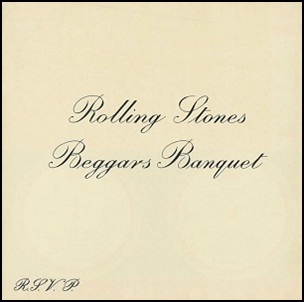
The Rolling Stones: Beggars Banquet

Beggars Banquet

On December 6, 1968, “Decca” label released “Beggars Banquet”, the seventh Rolling Stones studio album. “Beggars Banquet” was recorded from March 17 to July 25, at the “Olympic Studios” in London, and was produced by Jimmy Miller.

Track listing:

  • Mick Jagger – lead and backing vocals, harmonica
  • Keith Richards – lead and backing vocals, acoustic, electric and slide guitars, bass guitar
  • Brian Jones– slide guitar harmonica; Mellotron, sitar, tamboura; backing vocals
  • Bill Wyman– bass guitar; backing vocals, maracas
  • Charlie Watts– drums, backing vocals, cowbell; clave, tabla
  • Nicky Hopkins– piano, tack piano, organ
  • Rocky Dijon– congas
  • Ric Grech– fiddle
  • Dave Mason– shehnai, mellotron
  • Jimmy Miller– backing vocals
  • Watts Street Gospel Choir – backing vocals

Track listing:

All tracks by Mick Jagger and Keith Richards, except where noted.

  1. Sympathy for the Devil
  2. No Expectations
  3. Dear Doctor
  4. Parachute Woman
  5. Jigsaw Puzzle
  6. Street Fighting Man
  7. Prodigal Son – Robert Wilkins
  8. Stray Cat Blues
  9. Factory Girl
  10. Salt of the Earth

The Rolling Stones: Let It Bleed

Let it bleed

On December 5, 1969, “Decca” label released “Let It Bleed”, the eighth Rolling Stone album. It was recorded in November 1968, and February – November 1969, at the “Olympic Studios” in London, and was produced by Jimmy Miller. It  was the last album to feature Brian Jones and the first one to feature Mick Taylor.

Personnel

  • Mick Jagger– lead vocals, harmonica
  • Keith Richards– lead and backing vocals, guitars, bass guitar
  • Brian Jones– congas, autoharp
  • Mick Taylor– slide guitar, guitars
  • Bill Wyman– bass guitar, autoharp, vibes
  • Charlie Watts– drums
  • Ian Stewart– piano
  • Nicky Hopkins– piano, organ
  • Byron Berline– fiddle
  • Ry Cooder– mandolin, slide guitar
  • Al Kooper– piano, French horn, organ
  • Bobby Keys– tenor saxophone
  • Jimmy Miller– percussion, drums,tambourine
  • Rocky Dijon– percussion
  • Leon Russell– piano, horn arrangement
  • Jack Nitzsche– choral arrangements
  • Merry Clayton– vocals
  • The London Bach Choir– vocals
  • Nanette Newman– backing vocals
  • Doris Troy– backing vocals
  • Madeline Bell– backing vocals

Track listing

All tracks by Mick Jagger and Keith Richards, except where noted.

  1. Gimmie Shelter
  2. Love in Vain – Robert Johnson
  3. Country Honk
  4. Live With Me
  5. Let it Bleed
  6. Midnight Rambler
  7. You Got the Silver
  8. Monkey Man
  9. You Can’t Always Get What You Want

Jimi Hendrix Experience: Electric Ladyland

Jimi_Hendrix_-_Electric_Ladyland

On October 16, 1968, “Reprise” label released “Electric Ladyland”, the third and the final Jimi Hendrix Experience studio album. It was recorded July – December 1967, and January – August 1968, and was produced by Jimi Hendrix. The album featured cover of the Bob Dylan song, “All Along the Watchtower,” which became the Experience’s best selling single ever. Magazine “Rolling Stone‍ ” ranked “Electric Ladyland” at number 54 on its list of the “500 Greatest Albums of all Time”.

Personnel

  • Jimi Hendrix– lead vocals, guitar, piano, percussion, comb and tissue paper kazoo, electric harpsichord, bass
  • Noel Redding– lead and backing vocals, bass, acoustic guitar
  • Mitch Mitchell– lead and backing vocals, drums, percussion
  • Dave Mason– twelve string guitar, backing vocals
  • Al Kooper– piano
  • Steve Winwood– organ
  • Mike Finnigan– organ
  • Jack Casady– bass
  • Buddy Miles– drums
  • Brian Jones– percussion
  • Larry Faucette – congas
  • Freddie Smith – tenor saxophone
  • Chris Wood– flute
  • The Sweet Inspirations– backing vocals

Track listing

All tracks by Jimi Hendrix, except where noted.

  1. And the Gods Made Love
  2. Have You Ever Been to (Electric Ladyland)
  3. Crosstown Traffic
  4. Voodoo Chile
  5. Little Miss Strange – Noel Redding
  6. Long Hot Summer Night
  7. Come On (Let the Good Times Roll) – Earl King
  8. Gypsy Eyes
  9. Burning of the Midnight Lamp
  10. Rainy Day, Dream Away
  11. 1983…(A Merman I Should Turn to Be)
  12. Moon, Turn the Tides…Gently Gently Away
  13. Still Raining, Still Dreaming
  14. House Burning Down
  15. All Along the Watchtower – Bob Dylan
  16. Voodoo Chile (slight return)

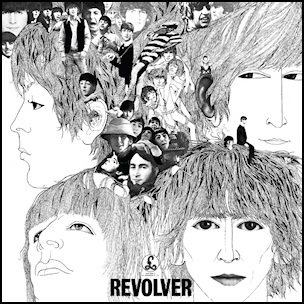
The Beatles: Revolver

Revolver

On August 5, 1966, “Parlaphone” released “Revolver” the seventh Beatles (The) album. It was recorded April – June 1966, at “EMI Studios” in London, and was produced by George Martin. The album was recognized by critics as having redefined the parameters of popular music. The album’s Grammy Award-winning cover design was created by Klaus Voormann, old band’s friend from their early years in Hamburg. “Rolling Stone” magazine ranked “Revolver” at number three on its list of the “500 Greatest Albums of All Time”.

Personnel

  • John Lennon– lead, harmony and backing vocals, rhythm and acoustic guitars; piano, Hammond organ, harmonium; tape loops, sound effects; cowbell, tambourine, maracas, handclaps, finger snaps
  • Paul McCartney– lead, harmony and backing vocals, bass, acoustic and lead guitars; piano, clavichord; tape loops, sound effects; handclaps, finger snaps
  • George Harrison– lead, harmony and backing vocals, lead, acoustic, rhythm and bass guitars; sitar, tambura; tape loops, sound effects; maracas, tambourine, handclaps, finger snaps
  • Ringo Starr– lead vocals, drums; tambourine, maracas, handclaps, finger snaps; tape loops
  • Mal Evans– bass drum, backing vocals
  • Anil Bhagwat – tabla
  • Peter Coe, Alan Branscombe– tenor saxophone
  • Eddie Thornton, Ian Hammer, Les Condon – trumpet
  • Alan Civil– French horn
  • Geoff Emerick- tape loops of the marching band
  • George Martin– piano, Hammond organ, tape loops of the marching band
  • Tony Gilbert, Sidney Sax, John Sharpe, Jurgen Hess
  • Stephen Shingles, John Underwood – viola
  • Derek Simpson, Norman Jones – cello
  • Brian Jones – backing vocals
  • Donovan– backing vocals
  • Marianne Faithfull– backing vocals
  • Neil Aspinall– backing vocals
  • Pattie Boyd– backing vocals

Track listing

All tracks by John Lennon and Paul McCartney, except where noted.

  1. Taxman – George Harrison
  2. Eleanor Rigby
  3. I’m Only Sleeping
  4. Love You To – George Harrison
  5. Here, There and Everywhere
  6. Yellow Submarine
  7. She Said She Said
  8. Good Day Sunshine
  9. And Your Bird Can Sing
  10. For No One
  11. Doctor Robert
  12. I Want To Tell You – George Harrison
  13. Got To Get You Into My Life
  14. Tomorrow Never Knows

Brian Jones

On July 3, 1969, Lewis Brian Hopkin Jones died aged 27. He was musician (guitar, sitar, harmonica, keyboards) and songwriter,  the founder, and original bandleader of the Rolling Stones. As he developed a serious drug problem over the years, his role in the band slowly diminished and Jagger and Richards overshadowed him. In June 1969, he was asked to leave the band and was replaced by Mick Taylor. Jones died by drowning in the swimming pool at his home on Cotchford Farm Hartfield, East Sussex. Bill Wyman (the original Rolling Stones bass player) said of Jones, “He formed the band, he chose the members. He named the band. He chose the music we played. He got us gigs. ..Very influential, very important, and then slowly lost it – highly intelligent – and just kind of wasted it and blew it all away.”

Ian Stewart

On December 12, 1985, Ian Stewart died aged 47. He was musician (piano, keyboards), best known as the co-founder of The Rolling Stones (the first one to respond to Brian Jones’s ad in “Jazz News” of 2 May 1962, seeking musicians for a new rhythm & blues band). Although being dismissed from The Rolling Stones in 1963 by the manager Andrew Loog Oldham, he remained with the band as road manager and piano player. Stewart played on all The Rolling Stones albums between 1964 and 1983, except for “Beggars Banquet”. He also played piano on Led Zeppelin’s “Rock and Roll” and “Boogie with Stu”,